Management

Mastering Bankroll Management – Essential Tips for Bettors

As you engage in betting, your ability to manage your bankroll effectively will significantly impact your overall success. You will need to develop a strategy that allows you to place bets while minimizing your risk of financial loss. By implementing a well-thought-out bankroll management plan, you can ensure that your betting activities are sustainable and enjoyable in the long term. You will learn how to make the most of your betting experience by optimizing your bankroll.

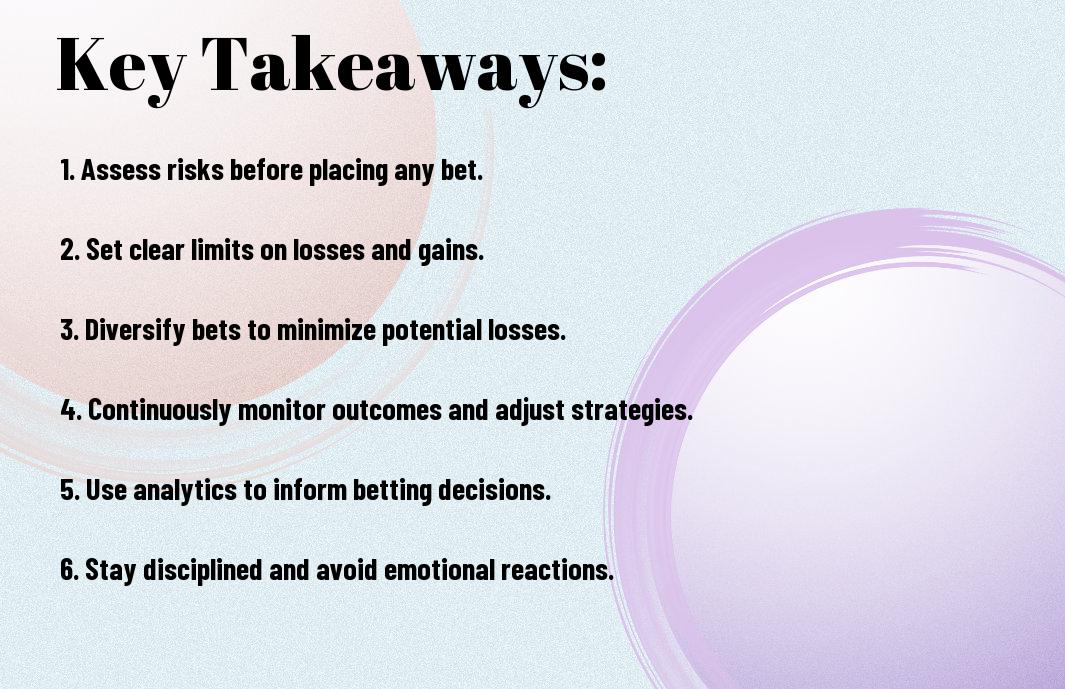
Key Takeaways:

  • Setting a budget is necessary for effective bankroll management, as it helps bettors determine how much they can afford to spend and avoid chasing losses.
  • Dividing the bankroll into smaller units can help bettors manage their risk and make more informed decisions, rather than betting large amounts on a single event.
  • Understanding the concept of variance is vital, as it can help bettors anticipate and prepare for both winning and losing streaks, and adjust their strategy accordingly.
  • Regularly reviewing and adjusting the bankroll management strategy can help bettors stay on track and make adjustments as needed to maintain a healthy and sustainable betting habit.
  • Discipline and patience are key components of successful bankroll management, as bettors need to be able to stick to their strategy and avoid making impulsive decisions based on emotions rather than logic.

Fundamentals of Bankroll Management

Your bankroll is the foundation of your betting strategy, and managing it effectively is crucial to your success as a bettor. It involves setting a budget, allocating funds, and making informed decisions to minimize losses and maximize gains.

Defining Your Total Betting Capital

Before you start betting, you need to determine your total betting capital, which is the amount of money you can afford to lose. This will help you set boundaries and make responsible betting decisions.

Setting Individual Bet Sizes

With a clear understanding of your bankroll, you can begin setting individual bet sizes that align with your overall strategy and risk tolerance. This involves allocating a specific percentage of your bankroll to each bet.

Your individual bet sizes will depend on various factors, including the type of bet, the odds, and your confidence level. You should aim to find a balance between maximizing your potential winnings and minimizing your potential losses. By setting optimal bet sizes, you can protect your bankroll and make steady progress towards your betting goals. As you gain more experience, you can adjust your bet sizes to reflect your changing risk tolerance and betting strategy.

Risk Assessment Strategies

Clearly, assessing risk is a vital part of managing your bankroll, and you’ll need to develop strategies to mitigate potential losses. You’ll want to consider your betting style, budget, and goals when determining the best approach for your risk assessment.

Percentage-Based Betting

With a well-thought-out plan, you can allocate a percentage of your bankroll to each bet, allowing you to manage your risk and potential returns effectively. You’ll be able to adjust your bets according to your confidence level and the odds of the event.

Fixed-Unit System

Risk management is key to successful betting, and a fixed-unit system can help you achieve this by betting a fixed amount or unit on each event, regardless of the odds or your confidence level. You’ll need to determine the optimal unit size based on your bankroll and betting goals.

FixedUnit betting systems offer you a straightforward way to manage your bankroll, as you’ll be betting the same amount on each event, allowing you to track your progress and adjust your strategy as needed, and you can use this system to develop a consistent betting approach that works for you.

Psychological Aspects

Once again, your mental state plays a significant role in managing your bankroll effectively. You need to be aware of your emotions and decision-making processes to make informed betting choices.

Emotional Control

Among the key factors affecting your betting decisions is emotional control. You must learn to manage your emotions, avoiding impulsive bets based on feelings rather than logic.

Discipline in Decision Making

Across various aspects of betting, discipline is crucial in making rational decisions. You should set clear goals and stick to your strategy, even when faced with losses or wins.

It is crucial to develop a disciplined approach to decision making, as this will help you avoid chasing losses or getting carried away with winnings. You can achieve this by setting a budget, tracking your bets, and regularly evaluating your strategy to ensure you’re on track to meet your goals. By doing so, you’ll be able to make more informed decisions and maintain a healthy bankroll.

Record Keeping

To maintain a healthy bankroll, you need to track your betting activities. You can learn more about effective bankroll management by visiting Five keys to bankroll management for expert advice.

Tracking Systems

On a daily basis, you will need to monitor your wins and losses to adjust your betting strategy. This involves using a reliable tracking system to log your bets and their outcomes.

Performance Analysis

Between each betting session, you should evaluate your performance to identify areas for improvement. This helps you refine your strategy and make better decisions.

Analysis of your betting performance is an ongoing process that helps you understand your strengths and weaknesses. As you analyze your performance, you will be able to identify patterns and trends in your betting, allowing you to make adjustments to optimize your results and protect your bankroll.
Common Pitfalls

Keep in mind that effective bankroll management requires discipline and self-control. You must avoid common mistakes that can lead to significant losses, and understand the risks involved in betting.

Chasing Losses

Betwixt the thrill of winning and the agony of losing, you may be tempted to chase your losses, but this can lead to a vicious cycle of betting more than you can afford, hoping to recoup your losses.

Overconfidence Traps

Around every corner, overconfidence can lurk, causing you to take unnecessary risks and bet more than your bankroll can handle, which can lead to significant losses and a depleted bankroll.

In addition, when you’re on a winning streak, you may feel invincible, but it’s important to stick to your strategy and not let your emotions dictate your betting decisions, as this can help you avoid making impulsive bets that can jeopardize your bankroll, and you should always prioritize your long-term goals over short-term gains.

Recovery Strategies

Despite experiencing a losing streak, you can recover your bankroll by implementing effective strategies, which will help you get back on track and minimize losses, allowing you to continue betting with confidence.

Adjusting Stakes

Across various betting systems, you will find that adjusting your stakes is vital to managing your bankroll, as it enables you to balance your bets and avoid significant losses, giving you more control over your betting activities.

Rebuilding Methods

Beneath the surface of rebuilding your bankroll lies a range of methods, including setting realistic goals and allocating your budget wisely, which you can use to regain your footing and make progress towards your betting objectives.

Due to the importance of rebuilding your bankroll, you should focus on developing a solid plan, taking into account your betting history, risk tolerance, and financial situation, which will help you make informed decisions and achieve your goals, ultimately leading to a more successful betting experience.

Conclusion

As a reminder, you now have the tools to effectively manage your bankroll. You understand the importance of setting limits and making informed decisions to protect your funds. By following these imperative tips, you can minimize losses and maximize your winnings, taking control of your betting experience and making the most of your investment, ensuring your betting journey is enjoyable and sustainable for you in the long run, with your financial security always at the forefront of your decision-making process.

FAQ

Q: What is bankroll management and why is it important for bettors?

A: Bankroll management refers to the process of managing the amount of money you have available for betting, ensuring that you can withstand losses and make informed decisions about your wagers. Effective bankroll management is necessary for bettors because it helps to minimize the risk of significant financial losses, allowing you to bet responsibly and sustain your betting activities over time. By setting a budget and sticking to it, you can avoid chasing losses and make more rational decisions about your bets, ultimately leading to a more enjoyable and successful betting experience.

Q: How can I determine the optimal bankroll size for my betting activities?

A: Determining the optimal bankroll size depends on several factors, including your betting frequency, average stake, and risk tolerance. A general rule of thumb is to set aside a bankroll that can cover at least 20-30 bets, assuming a moderate level of risk. You should also consider your overall financial situation, ensuring that your bankroll is not so large that it puts your financial stability at risk, but not so small that it limits your ability to place meaningful bets. It’s also important to regularly review and adjust your bankroll size as your betting activities and financial situation evolve.

Q: What strategies can I use to manage my bankroll effectively and avoid common pitfalls?

A: To manage your bankroll effectively, consider implementing strategies such as setting a fixed stake for each bet, using a unit-based betting system, and avoiding the temptation to chase losses or bet more than you can afford. You should also keep track of your betting history, including wins and losses, to identify trends and areas for improvement. Additionally, consider setting stop-loss limits and taking regular breaks from betting to avoid emotional decision-making and maintain a clear head. By combining these strategies, you can develop a disciplined approach to bankroll management and make more informed, effective betting decisions.


Risk Management in Betting – Protecting Your Bankroll

As you engage in betting, you need to prioritize protecting your bankroll from significant losses. You understand that betting inherently involves risk, and managing that risk is crucial to your long-term success. By implementing effective risk management strategies, you can minimize your exposure to potential losses and maximize your gains. You will learn how to make informed decisions to safeguard your funds and maintain a healthy bankroll, allowing you to bet with confidence and achieve your goals.

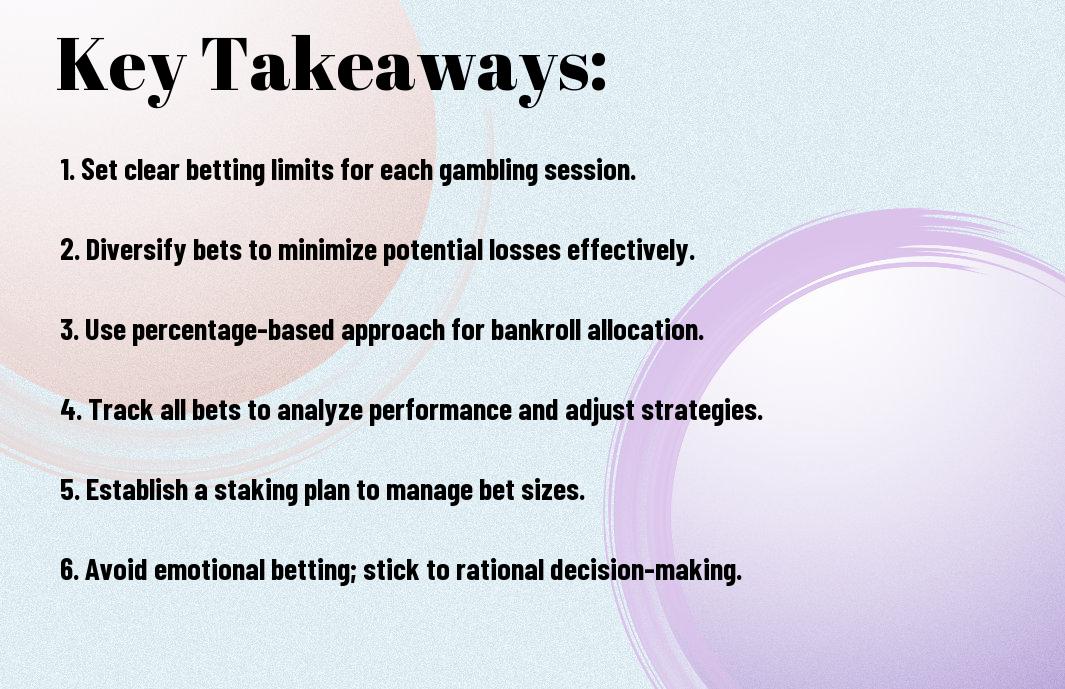
Key Takeaways:

  • Setting a budget and sticking to it is important in managing risk when betting, as it helps to prevent significant financial losses and ensures that betting remains a form of entertainment rather than a financial burden.
  • Understanding the concept of bankroll management is vital, as it involves allocating a specific amount of money for betting and dividing it into smaller units to manage risk and potential losses.
  • Diversifying bets and avoiding over-reliance on a single outcome can help to mitigate risk and increase the chances of long-term success in betting.
  • Keeping track of betting activities, including wins and losses, can help to identify patterns and areas for improvement, allowing for more informed decision-making and risk management.
  • Developing a betting strategy and sticking to it can help to minimize impulsive decisions and reduce the risk of significant losses, ultimately protecting the bankroll and ensuring a more enjoyable betting experience.

Core Principles of Betting Bankroll

Before you start betting, it’s necessary to understand the core principles of managing your bankroll, which will help you protect your funds and make informed decisions.

Defining Your Starting Capital

Generally, one of the first steps in managing your bankroll is to determine your starting capital, which is the amount of money you are willing to invest in betting, and you should set it based on your financial situation.

Setting Loss Limits

Always, an effective way to manage your bankroll is to set loss limits, which will help you control your spending and prevent significant financial losses, and you should adjust them according to your betting strategy.

Limits on your losses will help you to stay within your budget and avoid chasing losses, which can lead to a significant depletion of your bankroll, and you should regularly review and adjust your limits to ensure they remain aligned with your betting goals and financial situation.

Bankroll Management Systems

Clearly, having a solid bankroll management system in place is necessary to protecting your bankroll. You need to understand the different approaches to manage your betting funds effectively.

Fixed Unit Betting

Fixing your betting amount to a specific unit helps you maintain consistency. You can set a fixed unit, such as 2% of your bankroll, to bet on each event, allowing you to manage your risk.

Percentage-Based Betting

Against the fixed unit approach, percentage-based betting involves allocating a percentage of your bankroll to each bet. You can adjust this percentage based on your confidence in the bet, allowing for more flexibility.

But as you probe deeper into percentage-based betting, you’ll find that it offers more nuances. You can adjust the percentage based on the odds, the sport, or even the time of day, giving you more control over your bets. This approach allows you to be more adaptive and strategic with your betting, which can help you protect your bankroll more effectively.

Risk Assessment Techniques

Your risk assessment techniques are crucial in protecting your bankroll, and they involve evaluating various factors that can impact your bets, including odds, market volatility, and more, to make informed decisions and minimize potential losses.

Odds Evaluation

At the heart of risk assessment is odds evaluation, where you assess the likelihood of an event occurring and the potential payout, allowing you to make informed decisions about your bets and manage your risk effectively.

Market Volatility Factors

Behind the scenes of every bet, there are market volatility factors at play, including:

  • Team performance
  • Injuries and suspensions
  • Weather conditions

Thou shall consider these factors to make smart betting decisions and protect your bankroll.

This aspect of risk assessment requires a deeper understanding of the market and its fluctuations, including:

  • Public opinion and sentiment
  • Line movements and shifts
  • External factors like weather and injuries

Thou shall stay informed and adapt to these changes to maximize your chances of success and minimize your risk.

Money Management Strategies

To protect your bankroll, you need to implement effective money management strategies. This involves setting a budget, tracking your expenses, and making informed decisions about your bets. By doing so, you can minimize your losses and maximize your gains.

Staking Plans

Along with a solid budget, you should also consider staking plans that suit your betting style. This will help you manage your bets and avoid overspending, ensuring that you stay within your means and make the most of your bankroll.

Profit Goals

Beneath your overall betting strategy, you should set realistic profit goals. This will help you stay focused and motivated, and ensure that you’re working towards achievable targets. You can then adjust your strategy accordingly to meet these goals.

In fact, setting profit goals is an crucial part of your betting strategy, as it allows you to measure your progress and make adjustments as needed. You can set daily, weekly, or monthly goals, depending on your betting frequency and style, and use these to track your performance and stay on track.

Common Pitfalls

Many bettors fall into traps that can deplete their bankroll quickly, and being aware of these pitfalls is crucial to managing risk effectively. You need to be cautious and strategic in your betting approach to avoid common mistakes.

Emotional Betting

Above all, you should avoid making betting decisions based on emotions, as this can lead to impulsive choices that put your bankroll at risk. You must stay calm and composed, making rational decisions based on analysis and strategy.

Chasing Losses

Losing streaks can be frustrating, and you may feel the urge to recoup your losses quickly. You should be aware of this tendency, as it can lead to reckless betting and further losses.

Due to the desire to recover losses, you may start placing bets that are not well-thought-out, which can exacerbate the problem. You need to take a step back, reassess your strategy, and avoid making impulsive decisions that can harm your bankroll further, instead, you should focus on making informed bets that align with your overall betting plan.

Recovery Methods

Despite experiencing a losing streak, you can recover your bankroll by implementing effective strategies. This involves reassessing your betting approach and making adjustments to minimize losses and maximize gains.

Adjusting Stakes

Between each bet, you evaluate your performance and adjust your stakes accordingly. By doing so, you can manage your risk and prevent significant losses, allowing you to recover your bankroll over time.

Portfolio Diversification

Methods like spreading your bets across various markets and sports can help you mitigate risks. You can reduce your exposure to a single event and increase your chances of winning by diversifying your portfolio.

Hence, as you diversify your portfolio, you will notice that your risk decreases, and your potential for long-term success increases. You can achieve this by betting on different sports, leagues, or markets, and by exploring various bet types, such as point spreads, totals, or props, to create a well-rounded betting strategy that suits your needs and risk tolerance.

Summing up

To wrap up, you now understand the importance of risk management in betting to protect your bankroll. You can learn more about effective strategies by checking out the Sports Betting Bankroll Management and ROI Guide. By implementing these tactics, you will be able to make informed decisions and minimize losses, ensuring your betting experience is enjoyable and your bankroll is secure.

FAQ

Q: What is the importance of risk management in betting and how does it help in protecting my bankroll?

A: Risk management in betting is a set of strategies and techniques used to minimize potential losses and maximize gains. It helps in protecting your bankroll by setting limits on the amount you can bet, identifying the most profitable betting opportunities, and avoiding impulsive decisions based on emotions. Effective risk management involves understanding the odds, managing your emotions, and being disciplined in your betting approach. By implementing a solid risk management plan, you can ensure that your bankroll is protected and that you can continue to bet responsibly over the long term.

Q: How can I determine the optimal bet size to manage risk and protect my bankroll?

A: Determining the optimal bet size is a key aspect of risk management in betting. To do this, you need to consider several factors, including your overall bankroll, the odds of the bet, and your personal risk tolerance. A general rule of thumb is to bet no more than 2-5% of your bankroll on any single bet. This allows you to absorb potential losses and avoid significant depletion of your bankroll. Additionally, you should consider the Kelly Criterion, a formula that helps you determine the optimal bet size based on the probability of winning and the odds of the bet. By using these strategies, you can manage your risk and protect your bankroll from significant losses.

Q: What are some common mistakes that bettors make when it comes to risk management, and how can I avoid them to protect my bankroll?

A: One common mistake that bettors make is chasing losses, where they increase their bet size in an attempt to recoup previous losses. Another mistake is betting on impulse, without properly researching the odds and the teams or players involved. To avoid these mistakes, it’s crucial to have a solid risk management plan in place, including setting limits on your bet size and avoiding emotional decision-making. You should also keep track of your bets and analyze your performance over time to identify areas for improvement. By being aware of these common mistakes and taking steps to avoid them, you can protect your bankroll and make more informed betting decisions.

Unraveling Risk Management Techniques in Betting

As you venture into the world of betting, you’ll quickly realize that managing risk is crucial to your success. Your ability to navigate uncertainty and make informed decisions will directly impact your outcomes. You’ll need to develop strategies to mitigate losses and maximize gains, and that’s where effective risk management techniques come in. By understanding and applying these techniques, you can better protect your investments and achieve your betting goals.

Key Takeaways:

  • Effective risk management in betting involves setting a budget and sticking to it, to avoid significant financial losses and maintain a healthy bankroll.
  • Understanding the concept of probability and odds is vital in making informed betting decisions, as it helps bettors to assess the likelihood of an event occurring and make smarter wagers.
  • Diversification of bets can help to minimize risk, as it spreads the exposure across multiple events and outcomes, reducing the impact of a single loss.
  • Keeping track of betting history and analyzing performance can help to identify areas for improvement and inform future betting strategies, leading to more effective risk management.
  • Setting realistic expectations and avoiding chasing losses is vital in maintaining a disciplined approach to betting, as it prevents bettors from making impulsive decisions that can exacerbate losses.

Risk Assessment Fundamentals

For effective risk management in betting, you need to understand the fundamentals of risk assessment, which involves evaluating potential risks and their impact on your betting strategy, allowing you to make informed decisions and minimize losses.

Probability Analysis

Probabilistically, you will need to analyze the likelihood of an event occurring, taking into account historical data, trends, and other factors that may influence the outcome, helping you to make more accurate predictions and adjust your betting strategy accordingly.

Stake Sizing Methods

At the heart of risk management is the ability to manage your stakes effectively, you will need to determine the optimal amount to bet on each event, considering your bankroll, risk tolerance, and betting goals, to maximize your returns and minimize losses.

In addition, as you explore stake sizing methods, you will discover various techniques, such as the Kelly Criterion and fixed fraction betting, which can help you optimize your stakes and achieve a balance between risk and potential returns, allowing you to bet with confidence and precision, tailored to your unique betting style and objectives.

Bankroll Management

There’s no doubt that managing your bankroll is crucial to successful betting, as it helps you to make informed decisions and avoid financial difficulties. You need to allocate your funds wisely to minimize losses and maximize gains.

Percentage-Based Allocation

Along with a solid understanding of betting strategies, allocating a percentage of your bankroll to each bet is a common approach, allowing you to adjust your stakes based on your confidence level and the odds of the bet. You can decide what percentage of your bankroll to allocate to each bet.

Fixed Unit System

Similarly, a fixed unit system involves assigning a fixed unit value to each bet, which helps you to maintain consistency and discipline in your betting. You can set a unit value based on your bankroll and betting strategy.

But as you research deeper into the fixed unit system, you’ll find that it offers more benefits, such as helping you to avoid chasing losses and making impulsive decisions. You can adjust your unit value as your bankroll grows or shrinks, ensuring that your bets remain proportional to your overall bankroll, and you can maintain a consistent betting strategy over time.

Hedging Strategies

Now that you’re familiar with risk management, let’s examine hedging strategies. You can minimize losses by placing bets on multiple outcomes, ensuring a profit regardless of the result. This technique helps you manage risk and maximize returns.

Arbitrage Opportunities

Around every corner, you’ll find opportunities to capitalize on differing odds. You can take advantage of these discrepancies to guarantee a profit, making the most of your betting experience.

Lay Betting Techniques

One of the most effective ways to manage risk is through lay betting. You can bet against an outcome, allowing you to hedge your bets and minimize losses. This technique requires careful consideration of odds and outcomes.

Hence, as you explore lay betting techniques, you’ll discover the importance of understanding odds and probabilities. You can use lay betting to offset potential losses, creating a more balanced betting strategy that works in your favor, allowing you to make informed decisions and maximize your returns.

Value Identification

Not every bet you place will be a winning one, but with the right techniques, you can increase your chances of success. Identifying value in betting is key to making informed decisions and managing risk effectively.

Market Inefficiencies

Following thorough research, you can identify areas where the market has mispriced an event, allowing you to capitalize on these inefficiencies and make a profit. You will be able to make more accurate predictions and place smarter bets.

Odds Comparison Tools

Valuing your options is crucial, and with the right tools, you can compare odds across different bookmakers.

Tool Description
Odds comparison websites Allow you to compare odds across multiple bookmakers
Betting exchanges Enable you to bet against other users, often at better odds

Comparison of odds is an crucial step in identifying value, and with the right tools, you can make a more informed decision.

Bookmaker Odds
Bookmaker A 2.50
Bookmaker B 3.00

You can use these tools to find the best odds for your bet, increasing your potential winnings and helping you to manage your risk more effectively.

Loss Prevention Systems

Unlike other betting strategies, loss prevention systems focus on minimizing your losses. You can learn more about effective risk management techniques, such as those outlined in Risk Management in Sports Betting – Key Principles for Growth, to improve your betting experience.

Stop-Loss Limits

With a well-defined stop-loss limit, you can set a threshold for your losses, helping you to avoid significant financial damage. This simple yet effective technique allows you to control your betting expenses and make more informed decisions.

Recovery Plans

Above all, having a recovery plan in place is crucial to getting back on track after a loss. You should consider developing a strategy to recoup your losses and adjust your betting approach accordingly.

Further, when creating a recovery plan, you should assess your current financial situation, identify areas for improvement, and set realistic goals for your betting activities. By doing so, you can minimize the risk of significant losses and make your betting experience more enjoyable and sustainable.

Record Keeping

All successful bettors understand the importance of maintaining accurate records. You will be able to track your progress, identify patterns, and make informed decisions by keeping a record of your bets.

Performance Tracking

Above all, monitoring your performance helps you evaluate your betting strategy. You can assess your strengths and weaknesses by tracking your wins and losses, allowing you to adjust your approach accordingly.

Data Analysis Methods

About the various methods available, you can use statistical models or machine learning algorithms to analyze your data. You will be able to gain valuable insights into your betting habits and identify areas for improvement by applying these methods to your records.

Consequently, as you investigate deeper into data analysis, you will discover that it enables you to refine your betting strategy and make more informed decisions. You can analyze trends, detect anomalies, and optimize your bets by applying data analysis methods to your record-keeping, ultimately leading to more successful outcomes in your betting endeavors.

Final Words

Ultimately, you now have a deeper understanding of risk management techniques in betting, enabling you to make informed decisions. You can apply these strategies to minimize losses and maximize your winnings. By mastering your risk management skills, you will be able to navigate the betting world with confidence, protecting your investments and achieving your goals. Your betting experience will become more enjoyable and successful as you continue to refine your approach.

FAQ

Q: What is risk management in betting and why is it important?

A: Risk management in betting refers to the process of identifying, assessing, and mitigating potential risks associated with wagering. It involves setting a budget, determining the amount to bet, and choosing the right odds to minimize losses and maximize gains. Effective risk management is necessary in betting as it helps to prevent significant financial losses, promotes responsible gambling, and increases the overall betting experience. By implementing risk management techniques, bettors can make informed decisions, manage their expectations, and enjoy a more sustainable and enjoyable betting experience.

Q: What are some common risk management techniques used in betting?

A: There are several risk management techniques used in betting, including bankroll management, unit betting, and hedging. Bankroll management involves setting a budget and allocating a specific amount for betting. Unit betting involves betting a fixed percentage of the bankroll on each wager. Hedging involves placing multiple bets on different outcomes to minimize potential losses. Additionally, techniques such as value betting, where bettors look for odds that offer value, and line shopping, where bettors compare odds across different bookmakers, can also be effective in managing risk. These techniques can help bettors to manage their risk exposure, minimize losses, and maximize their potential returns.

Q: How can I develop an effective risk management strategy for my betting activities?

A: Developing an effective risk management strategy for betting involves several steps. First, it is necessary to set clear goals and objectives, including the amount you are willing to bet and the level of risk you are willing to take. Next, it is necessary to assess your risk tolerance and adjust your betting strategy accordingly. This may involve diversifying your bets, setting stop-loss limits, and avoiding chasing losses. It is also important to stay informed about the sports or events you are betting on, and to continuously monitor and adjust your strategy as needed. By taking a disciplined and informed approach to risk management, bettors can minimize their risk exposure, maximize their potential returns, and enjoy a more successful and sustainable betting experience.

Integrating Risk Management into Every Bet

As you navigate the world of betting, you’ll quickly realize that managing risk is crucial to your success. Your goal is to make informed decisions that balance potential gains with potential losses. By incorporating risk management strategies into your betting routine, you can protect your investments and maximize your returns. You will learn how to assess risks, set limits, and make smart bets that align with your goals and budget, helping you to bet with confidence and achieve your objectives.

Key Takeaways:

  • Effective risk management is necessary for long-term success in betting, as it helps to minimize losses and maximize gains by setting a budget and sticking to it.
  • Assessing the risk of each bet is vital, considering factors such as the odds, the teams or players involved, and any external factors that may impact the outcome.
  • Diversifying bets can help to spread risk, reducing the impact of any one loss and increasing the potential for overall profit.
  • Setting clear goals and strategies for betting is important, including deciding on the types of bets to place, the amount to stake, and the conditions under which to walk away.
  • Continuously monitoring and adjusting risk management strategies is necessary, as betting markets and conditions can change rapidly, and what works today may not work tomorrow.

Risk Assessment Foundations

The foundation of effective risk management in betting lies in understanding the underlying principles of risk assessment. You need to evaluate the potential risks and consequences of each bet, considering factors such as odds, stakes, and potential outcomes. By doing so, you can make informed decisions that align with your betting strategy and goals.

Probability Analysis

Assessing the probability of an event is crucial in betting. You will need to evaluate the likelihood of a particular outcome, taking into account historical data, trends, and other relevant factors. This analysis will help you make more accurate predictions and informed betting decisions.

Bankroll Management

By managing your bankroll effectively, you can minimize your risk exposure and maximize your potential returns. You should set a budget and stick to it, allocating your funds wisely across different bets and avoiding over-staking.

Even if you have a solid betting strategy, poor bankroll management can lead to significant losses. You should prioritize preserving your capital, as this will enable you to continue betting and pursuing your long-term goals. By adopting a disciplined approach to bankroll management, you can protect your funds and make more rational betting decisions.

Position Sizing Principles

Some of the most effective position sizing principles involve assessing your risk tolerance and adjusting your bets accordingly. You can learn more about integrating risk assessment into your strategy by checking out resources like Integrating Risk Assessment Into Lifecycle Management, which can help you make informed decisions.

Kelly Criterion Application

With a solid understanding of position sizing, you can apply the Kelly Criterion to optimize your bets and maximize your returns, taking into account your probability of winning and the potential payout.

Risk-to-Reward Ratios

The key to successful betting is finding the right balance between risk and potential reward, and you can achieve this by setting a risk-to-reward ratio that works for you.

It is important to consider your risk-to-reward ratio when placing bets, as it will help you determine the potential payout and adjust your position size accordingly, allowing you to manage your risk and make more informed decisions about your bets.

Market Volatility Management

Unlike other aspects of betting, managing market volatility requires a deep understanding of the underlying factors that drive price movements. You need to consider various factors, including economic indicators, news, and market sentiment, to make informed decisions. Your goal is to minimize losses and maximize gains in a volatile market.

Variance Handling

Above all, you should prioritize variance handling to mitigate the impact of unpredictable events on your bets. You can achieve this by diversifying your portfolio, setting stop-loss orders, and adjusting your position sizes accordingly. Your ability to handle variance will determine your long-term success in betting.

Drawdown Protection

Around the clock, you should be monitoring your bets to prevent significant drawdowns. You can implement various strategies, such as scaling back your bets or taking regular profits, to protect your capital. Your drawdown protection strategy should be tailored to your risk tolerance and betting goals.

Due to the importance of drawdown protection, you should regularly review and adjust your strategy to ensure it remains effective. You can use various tools and metrics, such as drawdown charts and risk-reward ratios, to evaluate your performance and make data-driven decisions. By prioritizing drawdown protection, you can minimize losses and maintain a healthy betting bankroll over time.

Risk Correlation Strategies

All successful bettors understand the importance of managing risk, and one effective way to do this is by implementing risk correlation strategies. You can minimize your exposure to potential losses by analyzing the relationships between different bets and adjusting your strategy accordingly. This approach allows you to make more informed decisions and maximize your returns.

Portfolio Diversification

After developing a solid understanding of risk correlation, you can apply this knowledge to diversify your betting portfolio. You will be able to spread your bets across different markets and assets, reducing your reliance on any one particular outcome and minimizing your overall risk.

Cross-Market Analysis

By analyzing the correlations between different markets, you can identify potential opportunities and risks that may impact your bets. You will be able to adjust your strategy to account for these factors, making more informed decisions and improving your chances of success.

And as you explore deeper into cross-market analysis, you will discover that it can help you identify trends and patterns that may not be immediately apparent. You can use this information to your advantage, making adjustments to your betting strategy to capitalize on these trends and minimize your losses, ultimately leading to more effective risk management and increased returns on your investments.

Risk Metrics Implementation

After establishing your risk management framework, you can begin implementing risk metrics to measure and analyze your betting performance. This involves using various metrics to assess your risk exposure and make informed decisions. You will be able to evaluate your bets and adjust your strategy accordingly, ensuring that you are maximizing your returns while minimizing your losses.

Value at Risk (VaR)

Besides other metrics, Value at Risk (VaR) is a key metric that helps you understand your potential losses. You can use VaR to estimate the potential loss of your bet with a given probability, allowing you to make more informed decisions about your betting strategy.

Risk-Adjusted Returns

Metrics such as Risk-Adjusted Returns help you evaluate the performance of your bets in relation to the risk taken. You can use this metric to compare the returns of different bets and adjust your strategy to optimize your results, taking into account the level of risk you are willing to accept.

Risk is an inherent part of betting, and managing it effectively is vital to your success. When considering Risk-Adjusted Returns, you should focus on finding a balance between risk and potential returns. You can achieve this by adjusting your betting strategy to minimize losses and maximize gains, ensuring that your returns are consistent with the level of risk you are taking. By doing so, you will be able to make more informed decisions and improve your overall betting performance.

Psychology of Risk

Many factors influence your betting decisions, and understanding the psychology of risk is vital to making informed choices. You need to consider your emotional state, decision-making process, and risk tolerance to develop a successful betting strategy.

Emotional Control

Beneath the surface of every bet, emotions can impact your decisions. You must learn to manage your emotions to avoid impulsive choices and make rational decisions that align with your goals.

Decision-Making Framework

Following a structured approach, you can develop a framework for making informed betting decisions. You should consider factors such as odds, probability, and potential outcomes to create a solid foundation for your bets.

Indeed, a well-defined decision-making framework is vital to your success. You will be able to evaluate risks and opportunities more effectively, making adjustments as needed to optimize your betting strategy. By using a systematic approach, you can minimize the influence of emotions and make more informed decisions that support your long-term goals.

Conclusion

On the whole, integrating risk management into every bet is crucial for your success. You will be able to make informed decisions and minimize losses by assessing your risks. Your betting strategy will become more effective, allowing you to achieve your goals. By managing risk, you can protect your investments and maximize your returns, ultimately leading to a more successful betting experience.

FAQ

Q: What is the importance of integrating risk management into every bet?

A: Integrating risk management into every bet is important for long-term success in betting. It helps to minimize potential losses and maximize gains by setting a budget, determining the optimal bet size, and selecting the most favorable odds. Effective risk management also enables bettors to make informed decisions, avoiding impulsive bets that can lead to significant financial losses. By incorporating risk management into every bet, individuals can develop a disciplined approach to betting, reducing the risk of significant financial losses and increasing the potential for long-term profitability.

Q: How can I effectively integrate risk management into my betting strategy?

A: To effectively integrate risk management into your betting strategy, start by setting a realistic budget and determining your risk tolerance. This involves deciding how much you are willing to bet on each event and how much you can afford to lose. It’s also important to educate yourself on the different types of bets, their associated risks, and the odds of winning. Additionally, consider using tools such as odds comparators and betting calculators to make informed decisions. Developing a pre-bet checklist can also help ensure that you consider all relevant factors before placing a bet, including the team’s current form, head-to-head statistics, and any injuries or suspensions that may impact the outcome.

Q: What are some common mistakes to avoid when integrating risk management into every bet?

A: One common mistake to avoid is chasing losses by placing larger bets in an attempt to recoup previous losses. This can lead to a significant increase in risk exposure and potential financial losses. Another mistake is failing to diversify your bets, which can result in overexposure to a particular market or event. It’s also important to avoid betting on impulse, as this can lead to poor decision-making and increased risk. Furthermore, not keeping track of your betting history and failing to adjust your strategy accordingly can hinder your ability to identify areas for improvement and optimize your risk management approach. By being aware of these common mistakes, you can develop a more effective risk management strategy and improve your overall betting performance.

Bankroll Management Mastery – A Bettor’s Essential Guide

As you navigate the world of betting, managing your bankroll effectively is key to your success. You need to understand how to allocate your funds, set limits, and make informed decisions to maximize your returns. Your betting strategy is only as strong as your bankroll management skills, and in this guide, you will learn the necessary techniques to master your finances and take your betting to the next level, helping you to make the most of your betting experience.

Key Takeaways:

  • Effective bankroll management is crucial for bettors to maintain a healthy and sustainable betting strategy, allowing them to withstand losing streaks and capitalize on winning ones.
  • Setting a budget and sticking to it is vital, as it helps bettors avoid chasing losses and making impulsive decisions that can deplete their bankroll.
  • Dividing the bankroll into units can help bettors manage their risk and make more informed decisions, as each unit represents a fixed percentage of the total bankroll.
  • Monitoring and adjusting the bankroll regularly is necessary to ensure it remains aligned with the bettor’s goals and risk tolerance, and to make adjustments as needed to maintain a profitable strategy.
  • Developing a long-term perspective and avoiding get-rich-quick mentality is key to successful bankroll management, as it allows bettors to focus on making consistent profits over time rather than trying to win big in a single bet.

Fundamentals of Bankroll Management

The foundation of successful betting lies in effective bankroll management. You need to understand that your bankroll is the backbone of your betting strategy, and managing it wisely is vital to your success. By doing so, you’ll be able to withstand losses and capitalize on winning streaks.

Risk Capital Assessment

For any serious bettor, evaluating your risk capital is vital. You must determine how much you can afford to lose without impacting your daily life, and allocate that amount to your betting activities. This assessment will help you make informed decisions and avoid financial difficulties.

Setting Financial Boundaries

Behind every successful bettor is a well-planned financial strategy. You should set boundaries to dictate how much you’re willing to spend, and stick to them. This will help you maintain control over your betting activities and avoid making impulsive decisions.

Financial discipline is key when setting boundaries. You should consider your income, expenses, and savings before allocating a specific amount to your betting activities. By doing so, you’ll be able to enjoy betting while maintaining a healthy financial balance, and you’ll be able to adjust your strategy as your financial situation changes, ensuring that your betting activities always align with your financial goals and priorities.

Staking Methods

You will need to choose a staking method that suits your betting style and bankroll. This decision will significantly impact your overall betting experience and potential returns.

Fixed Unit Betting

Alongside other methods, a fixed unit betting approach can be effective, where you bet a fixed amount or unit for each wager, regardless of the odds or your confidence level.

Percentage-Based Systems

With percentage-based systems, you bet a percentage of your bankroll on each wager, allowing for more flexibility and adaptability in your betting strategy.

Staking a percentage of your bankroll on each bet can help you manage risk and potential losses, as your bets will be proportionate to your current bankroll, allowing you to adjust your stakes as your bankroll grows or shrinks, and this will help you to maintain a consistent betting strategy over time, which is important for your long-term success as a bettor.

Risk Management Principles

Many bettors underestimate the importance of risk management, but you will learn to prioritize it as you develop your skills. Effective risk management helps you navigate the ups and downs of betting, ensuring your bankroll remains intact. By implementing solid risk management principles, you can minimize losses and maximize gains, setting yourself up for long-term success.

Variance Handling

Across various betting scenarios, you will encounter fluctuations in your bankroll due to variance. You need to understand that variance is a natural part of betting and learn to adapt to it. By doing so, you can make informed decisions and avoid making impulsive choices based on short-term results.

Loss Recovery Strategies

Handling losses is an imperative aspect of betting, and you must develop strategies to recover from them. You should focus on adjusting your betting amounts and strategies to minimize further losses and gradually rebuild your bankroll. This may involve taking a step back to reassess your approach and making adjustments to get back on track.

Variance in your betting results can significantly impact your loss recovery strategies. You will need to consider your overall betting strategy and make adjustments to manage variance effectively. As you develop your skills, you will learn to identify patterns and trends, allowing you to make more informed decisions and improve your chances of recovering from losses, ultimately protecting your bankroll and achieving your betting goals.

Psychological Aspects

Not many bettors consider the psychological aspects of bankroll management, but it plays a significant role in your success. You need to be aware of your emotions and thought processes to make informed decisions.

Emotional Control

Around every corner, emotions can affect your betting decisions, and you must learn to manage them. You should develop strategies to control your emotions and avoid impulsive decisions that can harm your bankroll.

Decision-Making Under Pressure

By analyzing your past decisions, you can identify patterns and areas for improvement, helping you make better choices when under pressure. You will be able to think more clearly and make more informed decisions.

Further, when you are under pressure, your brain can play tricks on you, leading to poor decision-making. You must develop techniques to manage pressure and stay focused on your long-term goals, ensuring that your decisions align with your overall strategy and do not put your bankroll at risk.

Record Keeping

After establishing your bankroll, you’ll need to track your progress, which is where Bankroll Management 101: Essential Tips For Responsible Bettors comes in handy. You’ll be able to monitor your wins and losses, making adjustments as needed to optimize your strategy.

Performance Tracking

Against the backdrop of your overall betting strategy, you’ll want to evaluate your performance regularly, identifying areas for improvement and celebrating your successes, allowing you to refine your approach and make informed decisions.

Data Analysis

One key aspect of effective record keeping is analyzing your data to identify trends and patterns, helping you to make more informed betting decisions and maximize your returns, as you continue to hone your skills.

Plus, as you examine deeper into data analysis, you’ll begin to uncover valuable insights into your betting habits, such as which types of bets are most profitable for you, and which areas you need to work on, enabling you to create a more personalized and effective betting strategy that suits your unique needs and goals.

Advanced Strategies

Keep in mind that advanced strategies involve more complex techniques.

  1. Bankroll allocation
  2. Risk management
Strategy Description
Bankroll allocation Assigning funds to different bets
Risk management Minimizing potential losses

Bankroll Growth Models

Against the odds, you can achieve steady growth by adopting a disciplined approach, focusing on consistent returns rather than short-term gains.

Portfolio Diversification

Alongside other strategies, you should consider diversifying your portfolio to minimize risk and maximize returns, as this will help you navigate the complexities of betting.

In fact, by spreading your bets across different markets and odds, you can reduce your exposure to any one particular outcome, allowing you to make more informed decisions and adapt to changing circumstances, which is necessary for your long-term success as a bettor, and you will be able to manage your bankroll more effectively.

To wrap up

Conclusively, you have gained valuable insights into Bankroll Management Mastery – A Bettor’s Essential Guide. You now understand how to effectively manage your bankroll, making informed decisions to maximize your winnings. Your betting strategy will improve, and you will minimize losses, ensuring a successful and enjoyable betting experience. You are equipped with the knowledge to take control of your betting journey, making your bankroll work for you.

FAQ

Q: What is Bankroll Management Mastery and why is it important for bettors?

A: Bankroll Management Mastery is a comprehensive guide designed to help bettors effectively manage their betting funds. It provides strategies and techniques to maximize winnings, minimize losses, and maintain a healthy bankroll. By mastering bankroll management, bettors can ensure a sustainable and enjoyable betting experience, avoid financial difficulties, and make informed decisions about their wagers.

Q: How does the Bankroll Management Mastery guide help bettors to set a budget and stick to it?

A: The Bankroll Management Mastery guide offers a step-by-step approach to setting a budget and sticking to it. It provides bettors with a clear understanding of how to assess their financial situation, determine their betting goals, and allocate their funds accordingly. The guide also offers practical tips and strategies for tracking expenses, monitoring progress, and making adjustments as needed to ensure that bettors stay within their means and avoid overspending.

Q: What strategies and techniques can bettors learn from the Bankroll Management Mastery guide to optimize their betting performance?

A: The Bankroll Management Mastery guide equips bettors with a range of strategies and techniques to optimize their betting performance. These include how to identify value bets, manage risk, and capitalize on opportunities. The guide also covers topics such as bet sizing, stake management, and emotional control, providing bettors with the skills and knowledge needed to make informed decisions and achieve their betting goals. By applying these strategies, bettors can enhance their overall betting performance, increase their chances of success, and enjoy a more rewarding betting experience.

Skip to content