
As you probe into the world of betting, you’ll encounter high-stakes decisions that test your mental endurance. Your ability to make informed choices under pressure will significantly impact your outcomes. You’ll face situations where emotions, biases, and instincts influence your decisions, often leading to impulsive bets. By understanding the psychological factors at play, you can develop strategies to optimize your decision-making process and improve your chances of success in the betting arena.
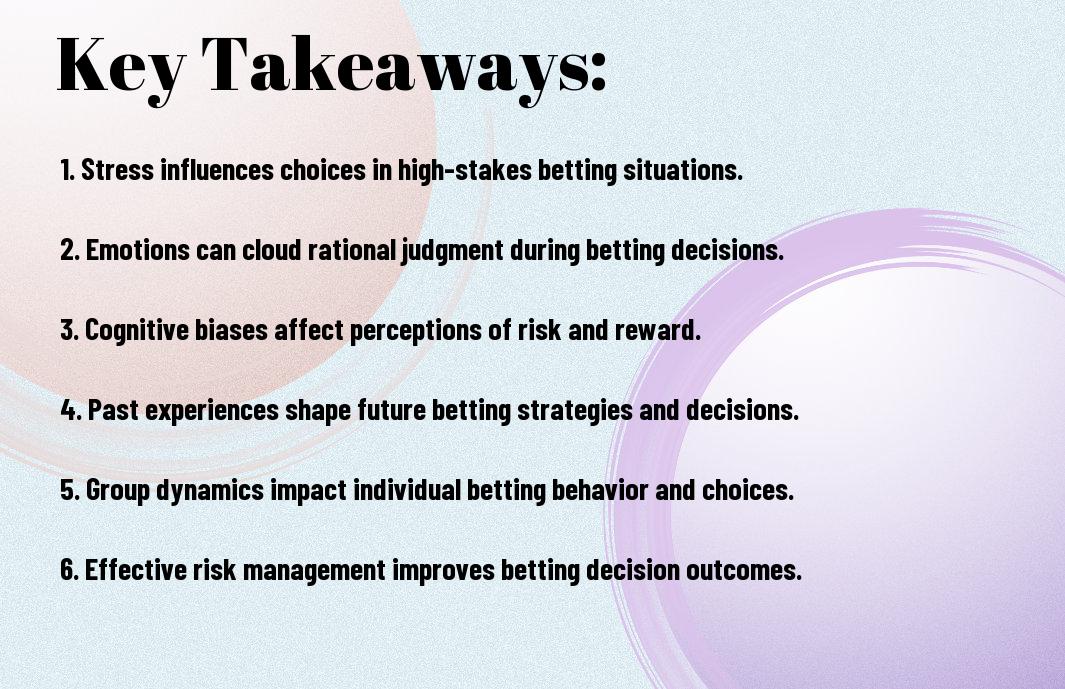
Key Takeaways:
- Emotions play a significant role in betting decisions, with fear, greed, and excitement often influencing choices under pressure, leading to impulsive and sometimes regrettable decisions.
- Bettors tend to exhibit cognitive biases, such as confirmation bias and the gambler’s fallacy, which can distort their perception of probability and lead to poor decision-making.
- Pressure to make quick decisions can result in a reliance on mental shortcuts, known as heuristics, which can simplify the decision-making process but also increase the risk of errors.
- The concept of loss aversion can also impact betting decisions, as the pain of losing can be more significant than the pleasure of winning, leading bettors to make risk-averse choices.
- Understanding the psychological factors that influence betting decisions can help individuals develop strategies to mitigate their impact, such as setting clear goals, managing emotions, and practicing self-reflection to improve decision-making under pressure.

The Cognitive Framework of Betting Behavior
Your betting behavior is influenced by a complex array of cognitive factors, including perception, attention, and memory, which all contribute to your decision-making process when placing bets.
Risk Assessment Mechanisms
Founded on a solid understanding of probability and statistics, your risk assessment mechanisms help you evaluate the likelihood of different outcomes and make informed decisions about your bets.
Emotional vs. Rational Processing
Aligned with your betting strategy, emotional and rational processing systems interact to influence your choices, with emotions often driving impulsive decisions and rational thinking guiding more cautious ones.
Behavior that is driven by emotions can lead to impulsive decisions, causing you to take unnecessary risks or chase losses, while rational processing helps you stick to your strategy and manage your bankroll effectively, allowing you to make more informed decisions and achieve your betting goals, as you navigate the complexities of betting and work to optimize your outcomes.
Time Pressure Elements in Betting
Even in the most composed of bettors, time pressure can significantly impact decision making. You may feel compelled to make a decision quickly, without fully considering the potential outcomes, which can lead to impulsive choices.
Speed of Decision Making
On the surface, making swift decisions may seem beneficial, but it can actually hinder your ability to make informed choices. You need to balance speed with careful consideration to make the most of your betting experience.
Stress Response Patterns
Alongside the pressure of time, your stress response patterns can also influence your betting decisions. You may feel anxious or overwhelmed, leading to a fight-or-flight response that clouds your judgment.
Pressure to make a decision within a limited timeframe can trigger a range of physiological and psychological responses in you. As your body responds to the stress, you may experience tunnel vision, where you focus solely on the immediate decision, neglecting other important factors that could impact your bet. Your heart rate and blood pressure may increase, further impairing your ability to think clearly and make a rational decision.
Loss Aversion and Betting Psychology
To understand the psychology of betting, you need to consider how loss aversion affects your decision-making. You tend to fear losses more than you value gains, leading to impulsive bets to avoid losses.
Fear Response in High-Stakes Situations
Between the thrill of winning and the agony of defeat, your emotions play a significant role in betting. You experience a heightened fear response in high-stakes situations, which can cloud your judgment and lead to poor decisions.
Recovery Strategies After Losses
Among the most effective ways to manage losses, you can develop strategies to cope with the emotional aftermath. You can take a break, reassess your bets, and adjust your approach to minimize further losses.
Strategies for recovering from losses involve taking a step back to assess your betting approach. You can analyze your past bets, identify patterns, and adjust your strategy to make more informed decisions. By doing so, you can minimize the impact of loss aversion and make more rational betting choices, ultimately improving your overall betting psychology and decision-making under pressure.
Social Influences on Betting Decisions
Now, as you probe into the world of betting, you’ll find that social influences play a significant role in shaping your decisions. You can learn more about this topic at The Psychology of Sports Betting Online: Exploring the Mental aspects that drive your behavior.
Peer Pressure Dynamics
Against the backdrop of social betting, you’ll often face pressure from peers to make certain decisions. You may feel compelled to follow the crowd, even if it goes against your better judgment, as you strive to fit in or gain approval from others.
Group Psychology in Gambling Environments
Decisions made in group settings can be influenced by the collective mindset, leading you to take risks you might not have taken alone. You may find yourself swept up in the excitement of the group, making impulsive bets that don’t align with your original strategy.
Indeed, as you navigate group psychology in gambling environments, you’ll notice that the energy of the crowd can be contagious, affecting your emotional state and decision-making process. You may experience a sense of euphoria when winning together, or a shared sense of disappointment when losing, which can impact your betting behavior and overall experience.
The Role of Experience in Betting
All bettors can attest to the fact that experience plays a significant role in shaping their decision-making process. As you place more bets, you develop a sense of what works and what doesn’t, allowing you to refine your strategy over time. Your experience helps you navigate the complexities of betting, making you a more informed and effective decision-maker.
Learning Patterns
Around the time you start betting, you begin to notice patterns in your behavior and the outcomes of your bets. As you analyze these patterns, you can identify areas for improvement, allowing you to adjust your approach and make more informed decisions in the future. You start to understand what influences your betting decisions and how to manage your risk more effectively.
Expertise Development
Along with gaining experience, you develop a sense of expertise in betting, which enables you to make more accurate predictions and better decisions. As you become more familiar with the betting process, you can analyze complex information, evaluate risks, and make more informed choices. Your expertise grows, and you become more confident in your ability to make successful bets.
A key aspect of expertise development is the ability to apply your knowledge in high-pressure situations. As you face intense moments in betting, such as a close game or a significant wager, your expertise helps you stay focused and make rational decisions. You can draw upon your experience and knowledge to manage your emotions and make the best possible choice, even when the stakes are high. This ability to perform under pressure is a hallmark of a skilled bettor, and it’s something that you can develop over time with practice and dedication.
Psychological Traps in Betting
Unlike other activities, betting involves making high-stakes decisions under pressure, which can lead to psychological pitfalls that affect your judgment. You may fall into common traps that influence your betting decisions, often unconsciously.
Common Cognitive Biases
Traps such as confirmation bias and anchoring can significantly impact your betting choices, leading you to make irrational decisions based on limited information or personal beliefs, rather than objective facts.
Illusion of Control
Biases like the illusion of control can lead you to overestimate your ability to influence random events, causing you to make riskier bets and potentially leading to significant losses.
The illusion of control is a particularly insidious trap, as it can lead you to believe that your actions or decisions have a direct impact on the outcome of events that are, in fact, entirely random. This can cause you to become more confident in your bets, leading to a false sense of security and potentially disastrous consequences for your bankroll.
Summing up
Conclusively, as you explore into the psychology of betting, you gain insight into your decision-making process under pressure. You understand how your emotions and biases influence your bets, and you can develop strategies to improve your judgment. By recognizing your strengths and weaknesses, you can make more informed decisions, ultimately enhancing your betting experience and potential for success. You will be better equipped to navigate the pressures of betting, making your decisions more effective.
FAQ
Q: What role does emotions play in decision making under pressure while betting?
A: Emotions play a significant role in decision making under pressure while betting. When individuals are under pressure, their emotional state can influence their judgment, leading to impulsive decisions. For instance, the fear of losing or the excitement of winning can cloud their rational thinking, causing them to make bets that are not in their best interest. Understanding and managing emotions is imperative to making informed decisions while betting.
Q: How does cognitive bias affect betting decisions, especially under pressure?
A: Cognitive bias significantly impacts betting decisions, particularly under pressure. Biases such as confirmation bias, where individuals favor information that supports their existing beliefs, or anchoring bias, where the initial piece of information influences subsequent decisions, can lead to poor betting choices. Under pressure, these biases can be exacerbated, causing bettors to overlook important information or misinterpret data, ultimately affecting the outcome of their bets. Being aware of these biases is the first step towards mitigating their influence on betting decisions.
Q: What strategies can be employed to improve decision making under pressure in betting scenarios?
A: Several strategies can be employed to improve decision making under pressure in betting scenarios. Setting a budget and sticking to it can help manage financial pressure. Practicing mindfulness and emotional regulation techniques can reduce the impact of emotions on decision making. Additionally, taking breaks and stepping away from the betting environment can provide a clearer perspective, reducing the influence of pressure. Furthermore, educating oneself about betting strategies, understanding the odds, and staying informed about the subject matter can enhance rational decision making, even when under pressure.