simulation

Using Simulation to Test and Develop Betting Systems

You can significantly improve your betting strategy by utilizing simulation to test and develop your systems. As you explore different approaches, simulation allows you to analyze your methods in a controlled environment. You can evaluate the effectiveness of your systems, identify potential flaws, and make data-driven decisions to optimize your betting strategy. By leveraging simulation, you can refine your approach and increase your chances of success in the betting world. Your betting systems will become more robust and reliable.

Key Takeaways:

  • Simulation allows for the testing of betting systems in a controlled environment, enabling the evaluation of their potential performance without risking real money.
  • By using simulation, bettors can identify potential flaws and biases in their systems, making adjustments before implementing them in live betting scenarios.
  • Simulation can help bettors to optimize their systems by testing different variables, such as stake sizes, betting frequencies, and risk management strategies.
  • Simulated testing can also aid in evaluating the long-term sustainability of a betting system, providing insights into its potential for profitability over an extended period.
  • Utilizing simulation in conjunction with historical data and statistical analysis can provide a comprehensive understanding of a betting system’s strengths and weaknesses, informing more informed decision-making.

    Simulation Fundamentals

    While developing a betting system, you will need to understand the basics of simulation. This involves creating a virtual environment to test your strategies, allowing you to analyze and refine your approach without risking actual funds. You can use simulation to evaluate various scenarios, identify potential pitfalls, and optimize your system for better performance.

    Random Number Generation

    One of the key components of simulation is generating random numbers that mimic real-world outcomes. You will need to ensure that your random number generator is reliable and unbiased, as this will directly impact the accuracy of your simulation results. You can use algorithms or existing libraries to generate random numbers, and it’s imperative to test them thoroughly to ensure they meet your requirements.

    Monte Carlo Methods

    Arbitrarily, you can apply Monte Carlo methods to simulate various outcomes and estimate the probability of certain events. This involves running multiple simulations with random inputs and analyzing the results to identify patterns and trends. You can use Monte Carlo methods to test different betting strategies and evaluate their potential performance.

    Considering the complexities of Monte Carlo methods, you will need to carefully design and implement your simulations to ensure accurate and reliable results. You should start by defining your objectives and identifying the key factors that impact your betting system. Then, you can use Monte Carlo methods to simulate various scenarios, analyze the results, and refine your strategy to optimize its performance. By doing so, you can gain valuable insights into your betting system and make informed decisions to improve your chances of success.

    Building Betting Models

    There’s a wide range of tools and techniques you can use to build betting models, and one of the most effective ways to test them is through simulation. You can find more information on what is the best sports bet simulation to help you get started.

    Mathematical Framework

    Any successful betting model relies on a solid mathematical framework, which you can use to inform your decisions and make predictions. You will need to consider factors such as probability, statistics, and data analysis to create a robust model.

    Risk Parameters

    With risk parameters, you can set boundaries and limits for your betting activities, helping you to manage your bankroll and minimize losses. You will need to consider factors such as stake size, bet frequency, and risk tolerance when setting your parameters.

    Further, when setting your risk parameters, you should consider your overall betting strategy and goals, as well as your personal financial situation. You will need to balance your desire for potential gains with the need to manage risk and protect your bankroll, and simulation can help you test and refine your approach.

    Data Integration

    For any betting system, data integration is a key component, as it allows you to combine various data sources and create a comprehensive testing environment. You can integrate different types of data, such as odds, scores, and player statistics, to create a robust simulation.

    Historical Market Data

    Contrary to what you might think, historical market data is not just about past results, but also about understanding trends and patterns that can inform your betting decisions. You will use this data to backtest your system and evaluate its performance.

    Statistical Analysis

    Meanwhile, statistical analysis is important for identifying correlations and relationships between different variables, allowing you to refine your betting strategy. You will apply statistical methods to your data to uncover insights that can help you make more informed decisions.

    At this stage, you will probe deeper into statistical analysis, exploring techniques such as regression, probability distributions, and hypothesis testing. You will use these methods to analyze your data, identify areas for improvement, and optimize your betting system to achieve better results. By applying statistical analysis, you can increase the accuracy of your predictions and make more confident betting decisions.

    System Testing Methods

    To develop a reliable betting system, you need to test it thoroughly. You can use various methods, including simulation, to evaluate your system’s performance and identify potential flaws. By testing your system, you can refine it and increase your chances of success.

    Backtesting Protocols

    The key to effective backtesting is to simulate real-world scenarios, allowing you to assess your system’s performance under different conditions. You can use historical data to test your system, giving you valuable insights into its strengths and weaknesses.

    Performance Metrics

    After testing your system, you will need to evaluate its performance using various metrics, such as return on investment and win rate. You can use these metrics to determine whether your system is profitable and make adjustments as needed.

    Understanding your performance metrics is vital to refining your betting system. You can use metrics such as expected value and Kelly Criterion to gain a deeper understanding of your system’s potential and make informed decisions about its development. By analyzing your metrics, you can identify areas for improvement and optimize your system for better results, helping you to make more informed betting decisions and increase your chances of success.

    Risk Management

    Once again, you’ll find that simulation plays a significant role in testing and developing your betting systems, particularly when it comes to risk management. You can use simulation to analyze potential risks and develop strategies to mitigate them, ensuring your betting system is robust and reliable.

    Bankroll Simulation

    Behind every successful betting system is a well-managed bankroll. You can simulate different bankroll scenarios to determine the optimal size and allocation of your funds, allowing you to make informed decisions about your betting strategy.

    Drawdown Analysis

    Along with bankroll simulation, drawdown analysis is an crucial tool for evaluating the performance of your betting system. You can use simulation to analyze the potential drawdowns of your system, helping you to identify areas for improvement and optimize your strategy.

    Bankroll management is closely tied to drawdown analysis, as a significant drawdown can quickly deplete your bankroll. You can use simulation to model different drawdown scenarios, allowing you to develop strategies to minimize losses and protect your bankroll. By analyzing the results of these simulations, you can refine your betting system and make more informed decisions about your risk management strategy.

    System Optimization

    Many betting systems can be optimized to improve their performance, and simulation is a key tool in this process. You can use simulation to test and refine your system, identifying the most effective parameters and strategies to maximize your returns.

    Parameter Tuning

    By adjusting the parameters of your betting system, you can fine-tune its performance and achieve better results. You will be able to identify the optimal settings for your system and make data-driven decisions to improve your chances of success.

    Efficiency Improvements

    To take your betting system to the next level, you need to focus on efficiency improvements. You can streamline your system, eliminating unnecessary complexity and reducing the risk of errors, allowing you to make more informed decisions and maximize your profits.

    This approach enables you to refine your betting system, making it more efficient and effective. You can use simulation to test different scenarios, identify areas for improvement, and implement changes that will give you a competitive edge. By continually evaluating and refining your system, you can stay ahead of the curve and achieve long-term success in the world of betting.

    Conclusion

    Drawing together the various aspects of simulation testing, you can refine your betting systems to maximize returns. By using simulation, you can test and develop your strategies, identifying potential flaws and areas for improvement. This allows you to make informed decisions and optimize your approach, giving you a competitive edge in the betting market. With simulation, you can confidently refine your systems and achieve your betting goals.

    FAQ

    Q: What are the benefits of using simulation to test and develop betting systems?

    A: Using simulation to test and develop betting systems allows you to evaluate the performance of your strategy in a controlled environment, without risking real money. This approach enables you to identify potential flaws, optimize parameters, and refine your system before deploying it in live markets. Simulation also provides the ability to test a large number of scenarios, including different market conditions and variables, which can help to increase the robustness and reliability of your betting system.

    Q: How can simulation be used to evaluate the effectiveness of a betting system?

    A: Simulation can be used to evaluate the effectiveness of a betting system by generating a large number of simulated bets based on historical data or hypothetical scenarios. The results of these simulations can then be analyzed to determine the system’s potential return on investment, risk profile, and other key performance metrics. Additionally, simulation can be used to compare the performance of different betting systems, allowing you to identify the most effective strategy for your specific goals and risk tolerance. By using simulation in this way, you can make more informed decisions about your betting strategy and avoid costly mistakes.

    Q: What are some common pitfalls to avoid when using simulation to test and develop betting systems?

    A: Some common pitfalls to avoid when using simulation to test and develop betting systems include over-optimization, where the system is tailored too closely to historical data and fails to perform well in live markets. Another pitfall is failing to account for transaction costs, such as commissions and fees, which can significantly impact the profitability of a betting system. It’s also important to avoid using overly simplistic or unrealistic simulations that do not accurately reflect real-world market conditions. By being aware of these potential pitfalls, you can use simulation more effectively to develop and refine a successful betting system that delivers consistent results over time.

Simulation Techniques – Testing Your Betting Systems Safely

As you develop your betting strategies, you need to test their effectiveness without risking your money. You can achieve this by using simulation techniques, which allow you to evaluate your systems in a virtual environment. By simulating various scenarios, you can assess the potential outcomes of your bets and identify areas for improvement. This approach enables you to refine your strategies and make informed decisions, ultimately increasing your chances of success in the betting world. You can test your systems safely and efficiently.

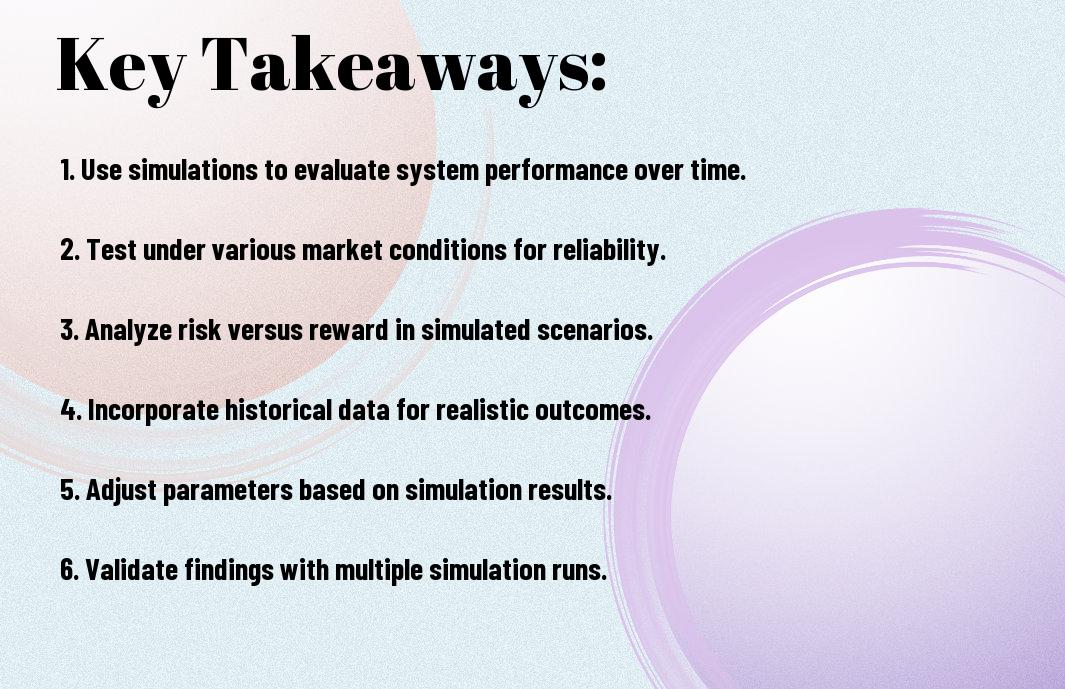
Key Takeaways:

  • Simulation techniques allow you to test your betting systems in a controlled environment, reducing the risk of financial loss and enabling you to refine your strategies before applying them in real-world scenarios.
  • By using simulation tools, you can analyze the performance of different betting systems, identify potential flaws, and make data-driven decisions to improve your chances of success.
  • Simulation testing helps you to evaluate the long-term viability of a betting system, taking into account various factors such as odds, stakes, and market conditions, to determine its potential for profitability.
  • Simulations can also be used to test the robustness of a betting system in different scenarios, including unexpected events or changes in market conditions, to ensure it can withstand various challenges.
  • Through simulation techniques, you can optimize your betting systems, minimize risks, and develop a more informed approach to betting, ultimately leading to more effective decision-making and potentially better outcomes.

Core Simulation Methods

Your betting system’s performance can be evaluated using various simulation techniques, allowing you to test and refine your strategy without risking real money. You can analyze your system’s strengths and weaknesses, making data-driven decisions to optimize your approach.

Backtesting Historical Data

Prior to implementing your betting system, you need to test it against historical data to gauge its potential performance. You can use past events to simulate the outcomes of your bets, giving you valuable insights into your system’s effectiveness.

Monte Carlo Simulations

Alternatively, a similar approach to backtesting is using Monte Carlo simulations, which involve generating random outcomes to mimic real-world scenarios. You can use this method to simulate thousands of possible outcomes, helping you understand your system’s potential risks and rewards.

Historically, Monte Carlo simulations have been used in various fields to model complex systems and predict outcomes. As you use this method to simulate your betting system, you’ll gain a deeper understanding of how it performs under different conditions, allowing you to make adjustments and improvements to increase your chances of success. You’ll be able to analyze the results of your simulations, identifying patterns and trends that can inform your betting decisions.

Risk Management Tools

It is necessary to have the right risk management tools when testing your betting systems, as they help you assess potential losses and make informed decisions. You can use these tools to evaluate your strategies and minimize risks, ensuring that your betting systems are effective and reliable.

Bankroll Simulation

Above all, simulating your bankroll helps you understand how your betting system performs under various conditions. You can test different scenarios, adjusting stakes and bets to see how your bankroll holds up, allowing you to refine your strategy and make adjustments as needed.

Drawdown Analysis

Analytically, drawdown analysis is a valuable tool for evaluating your betting system’s performance. You can use it to identify potential losses and assess the overall risk of your strategy, making it easier to adjust your approach and minimize losses.

Due to the importance of understanding drawdowns, you should carefully analyze your betting system’s performance during periods of decline. You can use this information to refine your strategy, adjusting your bets and stakes to minimize losses and maximize gains, ultimately helping you develop a more effective betting system.

Data Collection

For your betting system to be effective, you need to collect relevant data. This involves gathering information from various sources, including historical data, statistics, and trends. You will use this data to test and refine your system, ensuring it is reliable and profitable.

Quality Sources

The accuracy of your data is dependent on the sources you use. Therefore, you should focus on finding trustworthy and reliable sources, such as official sports websites, reputable sports databases, and established betting platforms, to ensure the integrity of your data.

Data Cleaning Techniques

One of the most important steps in data collection is cleaning and preprocessing the data. You will need to remove any inconsistencies, handle missing values, and transform the data into a suitable format for analysis, allowing you to make informed decisions about your betting system.

Even after cleaning your data, you may still encounter issues that can affect the performance of your betting system. You should continually monitor your data for any discrepancies or anomalies, and be prepared to adjust your cleaning techniques as needed to ensure the accuracy and reliability of your system, which will ultimately help you make more informed betting decisions and increase your chances of success.

Performance Metrics

All betting systems can be evaluated using various performance metrics, which help you assess their effectiveness and make informed decisions. You will use these metrics to determine whether your system is profitable and identify areas for improvement.

Return on Investment (ROI)

Behind every successful betting system is a solid understanding of return on investment, which calculates the profit generated by your bets relative to the amount invested. You can use ROI to compare the performance of different systems and adjust your strategy accordingly.

Statistical Significance

Statistically, the significance of your results is important in determining whether your betting system is genuinely effective or just a product of chance. You need to consider the statistical significance of your findings to avoid making decisions based on random fluctuations.

To further understand statistical significance, you will need to investigate into the world of probability and hypothesis testing. You can use statistical tools to determine whether your results are significant, and if they indicate a genuine edge in your betting system. This will help you refine your strategy and make more informed decisions about your bets.

Common Pitfalls

Despite your best efforts, you may still encounter issues when testing your betting systems. You need to be aware of the potential pitfalls to avoid costly mistakes.

Overfitting Issues

Beneath the surface of your testing data, overfitting can occur when your system is too closely tailored to historical data, failing to account for future variations, and you must be cautious of this when evaluating your results.

Sample Size Errors

Behind the scenes, sample size errors can significantly impact your testing outcomes, and you should consider this when assessing the reliability of your system’s performance, as small sample sizes can lead to inaccurate conclusions.

Due to the complexity of sample size errors, you will need to carefully consider the number of trials you run, ensuring it is sufficient to provide a reliable indication of your system’s potential, and you should also be aware that increasing the sample size can help to mitigate these errors, allowing you to make more informed decisions about your betting strategy.

Real-World Application

Now that you have simulated your betting system, it’s time to apply it in the real world. You can do this by testing your system with minimal risk, allowing you to refine your strategy before investing larger amounts.

Paper Trading

Along with simulation, paper trading is a great way to test your betting system without risking actual money. You track your bets and their outcomes as if you were betting with real money, giving you a clear picture of your system’s performance.

Small-Scale Testing

Above all, small-scale testing helps you validate your betting system’s effectiveness. You start by investing a small amount of money, allowing you to assess your system’s performance in a live environment.

For instance, you can begin by placing small bets and monitoring the results, making adjustments to your system as needed. This approach enables you to fine-tune your strategy, building confidence in your betting system before scaling up your investments.

Summing up

Upon reflecting on simulation techniques, you can see how they help you test your betting systems safely. You can evaluate your strategies without risking real money, allowing you to identify potential flaws and make adjustments. By using simulation techniques, you can refine your approach and increase your chances of success, giving you confidence in your betting decisions and helping you achieve your goals. You can now apply these techniques to your own betting systems and make more informed decisions.

FAQ

Q: What are simulation techniques and how do they help in testing betting systems?

A: Simulation techniques are methods used to mimic real-life scenarios in a controlled environment, allowing you to test and evaluate the performance of your betting systems without risking actual money. These techniques involve using historical data or generated scenarios to simulate the outcomes of various bets, enabling you to assess the effectiveness and potential profitability of your betting strategies. By using simulation techniques, you can identify potential flaws, optimize your systems, and make informed decisions before placing real bets.

Q: How can I use simulation techniques to test my betting systems safely and efficiently?

A: To use simulation techniques safely and efficiently, start by gathering a large dataset of historical information relevant to your betting system. This could include past game results, team statistics, or other relevant factors. Next, use software or programming tools to simulate the application of your betting system to this historical data, generating outcomes as if you had placed real bets. Analyze the results to evaluate the performance of your system, looking for metrics such as return on investment (ROI), win/loss ratio, and any patterns or trends that emerge. This process allows you to refine your system, adjusting parameters or strategies based on the simulated outcomes, all without risking actual funds.

Q: What are the benefits of using simulation techniques for testing betting systems, and how can they improve my betting strategy?

A: The benefits of using simulation techniques for testing betting systems are numerous. Firstly, they allow for risk-free testing, preserving your capital while you refine your strategies. Simulation also enables the rapid testing of multiple scenarios and strategies, saving time and effort compared to waiting for real-world outcomes. Additionally, simulation techniques can help you identify and mitigate potential risks and biases in your betting system, leading to more informed decision-making. By iteratively testing and refining your strategies through simulation, you can develop more effective and profitable betting systems, ultimately improving your chances of success in real betting scenarios.

Skip to content