data

Using Data Analytics to Sharpen Your Betting System

You can significantly improve your betting outcomes by leveraging data analytics. As you develop your betting strategy, you’ll find that data-driven insights help you make informed decisions. Your betting system can be refined by analyzing trends, patterns, and probabilities. By applying data analytics, you can identify areas of improvement and optimize your approach to increase your chances of success. This will enable you to make smarter bets and achieve your goals.

Key Takeaways:

  • Utilizing data analytics can significantly enhance the effectiveness of a betting system by providing insights into trends, patterns, and probabilities that may not be immediately apparent through traditional analysis.
  • Data analytics can help identify biases and inefficiencies in the market, allowing for more informed decision-making and potentially leading to increased returns on investment.
  • By applying statistical models and machine learning algorithms to historical data, bettors can develop predictive models that forecast outcomes with a higher degree of accuracy, giving them an edge over the competition.
  • Continuous monitoring and analysis of data are necessary to adapt to changing circumstances, such as shifts in team performance or changes in market conditions, and to refine the betting system over time.
  • Combining data analytics with a deep understanding of the sport or market being bet on can lead to a more comprehensive and successful betting strategy, as it allows for the integration of both quantitative and qualitative factors.

Data Collection Methods

While developing a betting system, you need to gather relevant data to inform your decisions. This involves identifying sources, collecting, and organizing data to analyze and gain insights.

Historical Performance Data

Prior to creating your system, you will need to collect historical performance data on the teams, players, or events you’re interested in. This data will serve as the foundation for your analysis and help you identify trends and patterns.

Variable Identification

Behind every successful betting system is a thorough understanding of the variables that impact outcomes. You must identify the factors that influence the events you’re betting on, such as team strength, player injuries, or weather conditions.

The key to effective variable identification is to consider all the factors that could potentially impact the outcome of an event. You should analyze your data to determine which variables have the greatest impact and how they interact with each other. By doing so, you can develop a more accurate and reliable betting system that takes into account the complexities of the events you’re betting on. As you explore deeper into your data, you will be able to refine your system and make more informed decisions.

Statistical Analysis Tools

Clearly, statistical analysis tools are imperative for sharpening your betting system, enabling you to make informed decisions based on data-driven insights. You can leverage these tools to analyze large datasets, identify trends, and predict outcomes, ultimately enhancing your betting strategy.

Regression Models

To develop a robust betting system, you will need to utilize regression models, which allow you to establish relationships between variables and make predictions based on historical data, helping you to refine your betting approach and increase your chances of success.

Probability Distribution

Among the various statistical analysis tools at your disposal, probability distribution is a key concept, as it enables you to understand the likelihood of different outcomes, allowing you to make more accurate predictions and informed betting decisions.

Tools like probability distribution graphs and calculators can help you visualize and calculate the probability of specific events, enabling you to adjust your betting strategy accordingly, and you can use this information to determine the potential risks and rewards associated with different bets, ultimately helping you to make more informed decisions.

Pattern Recognition

Unlike other approaches, pattern recognition in data analytics helps you identify repeating trends and behaviors in your betting system, allowing you to make more informed decisions.

Trend Analysis

For instance, analyzing trends in your betting history can help you understand what works and what doesn’t, enabling you to adjust your strategy accordingly.

Correlation Metrics

Along with trend analysis, correlation metrics help you measure the relationship between different variables, giving you a clearer picture of your betting system’s performance.

Plus, by using correlation metrics, you can research deeper into your data to identify factors that may be influencing your outcomes, such as team performance, weather conditions, or even referee decisions, allowing you to refine your betting strategy and make more accurate predictions.

Risk Management Integration

Once again, you’ll find that data analytics plays a significant role in refining your betting system, particularly when it comes to risk management. By analyzing your betting patterns and outcomes, you can identify areas where you can minimize losses and maximize gains.

Bankroll Allocation

The key to successful betting is allocating your bankroll effectively, and data analytics can help you do just that. You can use data to determine the optimal amount to bet on each game, ensuring you’re not over-extending yourself.

Risk-Reward Ratios

The risk-reward ratio is a fundamental concept in betting, and data analytics can help you calculate it with precision. You can use data to determine the potential risks and rewards of each bet, allowing you to make informed decisions.

Also, by analyzing your risk-reward ratios, you can identify trends and patterns in your betting, helping you to adjust your strategy and make more profitable bets. You can use data to compare the potential returns of different bets, and make decisions based on your own risk tolerance and betting goals.

System Optimization

Despite the complexity of betting systems, data analytics can help you refine your approach. By analyzing your betting history and performance, you can identify areas for improvement and make data-driven decisions to optimize your system.

Performance Metrics

Along with tracking your overall win-loss record, you should also monitor key performance metrics such as return on investment and betting value to evaluate your system’s effectiveness and identify areas for improvement.

Adjustment Protocols

At the heart of system optimization are adjustment protocols, which enable you to adapt your strategy in response to changing circumstances, such as shifts in team performance or changes in betting markets, allowing you to stay ahead of the curve.

Further, when implementing adjustment protocols, you will need to consider factors such as the timing and magnitude of adjustments, as well as the potential impact on your overall betting strategy, ensuring that you make informed decisions that align with your goals and risk tolerance, and enabling you to continually refine and improve your betting system over time.

Technology Implementation

Your betting system can greatly benefit from the implementation of advanced technology, allowing you to make more informed decisions and stay ahead of the game. By leveraging data analytics and machine learning algorithms, you can gain valuable insights and optimize your betting strategy.

Software Solutions

About the various software solutions available, you have a wide range of options to choose from, each offering unique features and capabilities to enhance your betting system. You can select the one that best fits your needs and budget.

Automation Tools

Above all, automation tools can help you streamline your betting process, saving you time and effort. You can set up automated alerts and notifications to stay informed about market trends and make timely decisions.

Considering the benefits of automation tools, you can take your betting system to the next level by integrating these tools into your strategy. You can automate tasks such as data collection, analysis, and even placing bets, allowing you to focus on higher-level decision-making and maximizing your returns.

Final Words

Upon reflecting on the strategies outlined, you now have the tools to refine your betting system using data analytics. You can analyze trends, identify patterns, and make informed decisions to optimize your outcomes. By leveraging data, you will enhance your chances of success, allowing you to place smarter bets and maximize your returns. With practice and patience, you will develop a sharper betting system, giving you a competitive edge in the betting landscape, and ultimately, improving your overall betting experience.

FAQ

Q: What is the role of data analytics in sharpening my betting system?

A: Data analytics plays a significant role in sharpening your betting system by providing valuable insights and patterns in the data. By analyzing historical data, you can identify trends, strengths, and weaknesses of teams, players, and coaches, which can inform your betting decisions. Data analytics can help you to develop a more informed and strategic approach to betting, increasing your chances of making successful bets. With the help of data analytics, you can also monitor and adjust your betting system over time, making data-driven decisions to optimize your results.

Q: How can I effectively use data analytics to improve my betting system?

A: To effectively use data analytics to improve your betting system, you need to start by collecting and analyzing relevant data. This can include data on team and player performance, past match results, injuries, weather conditions, and other factors that can impact the outcome of a game. You can use statistical models and machine learning algorithms to analyze the data and identify patterns and trends. It’s also important to stay up-to-date with the latest data and adjust your betting system accordingly. Additionally, you can use data visualization tools to present the data in a clear and concise manner, making it easier to interpret and make informed decisions.

Q: What are some common pitfalls to avoid when using data analytics to sharpen my betting system?

A: When using data analytics to sharpen your betting system, there are several common pitfalls to avoid. One of the most significant pitfalls is overreliance on historical data, which may not always be indicative of future results. You should also be cautious of data quality issues, such as incomplete or inaccurate data, which can lead to flawed analysis and poor decision-making. Furthermore, it’s necessary to avoid overcomplicating your betting system with too many variables, which can lead to analysis paralysis. Finally, you should be aware of the limitations of data analytics and not rely solely on data-driven decisions, but also consider other factors such as team dynamics, coaching, and external factors that can impact the game.

From Data to Decisions – Leveraging Analytics in Betting

As you navigate the world of betting, you’re constantly looking for ways to gain an edge. Your goal is to make informed decisions that maximize your returns. By harnessing the power of analytics, you can turn data into actionable insights, driving your betting strategy forward. You’ll learn how to analyze trends, identify patterns, and make data-driven decisions that boost your chances of success in the competitive betting landscape.

Key Takeaways:

  • Effective use of analytics in betting can significantly enhance decision-making by providing insights into patterns, trends, and probabilities that might not be immediately apparent through traditional methods.
  • Advanced analytics tools can process large volumes of data quickly, allowing for real-time adjustments and more informed betting strategies based on the most current information available.
  • Understanding the limitations and potential biases of analytics is important, as overreliance on data without considering external factors can lead to misinterpretation of the information provided.
  • Combining data analysis with domain expertise is imperative for making strategic decisions, as it ensures that the insights gained from analytics are contextualized and applied appropriately within the betting landscape.
  • Continuous learning and adaptation are necessary in the field of betting analytics, as new data sources, methodologies, and technologies emerge, offering opportunities to refine strategies and stay competitive.

Data Collection in Sports Betting

Before exploring into the world of sports betting analytics, you need to collect relevant data. This involves gathering information from various sources, including historical game data, player statistics, and real-time updates. Your goal is to build a comprehensive dataset that will help you make informed decisions.

Primary Data Sources

Following the initial data collection, you’ll find that primary sources such as official sports leagues, teams, and player associations provide valuable information. Your task is to identify these sources and extract relevant data to fuel your analytics efforts.

Quality Assessment Methods

After collecting your data, you’ll need to assess its quality to ensure accuracy and reliability. You’ll use methods such as data validation and verification to guarantee that your data is trustworthy and suitable for analysis.

Another aspect of quality assessment involves evaluating the data for consistency and completeness. You’ll need to check for missing values, outliers, and inconsistencies, and develop strategies to address these issues, ensuring that your data is robust and reliable enough to support your betting decisions.

Statistical Models and Frameworks

Clearly, statistical models and frameworks are vital for making informed decisions in betting, as they enable you to analyze and interpret complex data, identifying patterns and trends that can inform your betting strategy, allowing you to make more accurate predictions and maximize your returns.

Probability Models

Between the various statistical models available, probability models are particularly useful in betting, as they allow you to calculate the likelihood of different outcomes, enabling you to make more informed decisions and adjust your betting strategy accordingly, based on your analysis of the data and the probability of different events occurring.

Regression Analysis Tools

Tools such as regression analysis can be highly effective in betting, as they enable you to identify relationships between different variables, allowing you to make more accurate predictions and adjust your strategy to maximize your returns, by analyzing the impact of different factors on the outcome of events.

But as you examine deeper into regression analysis tools, you will discover that they offer a range of benefits, including the ability to identify correlations and trends, and to make predictions based on historical data, enabling you to refine your betting strategy and make more informed decisions, ultimately increasing your chances of success in the betting market, and allowing you to stay ahead of the competition, by leveraging the power of data and analytics to inform your decisions.

Risk Management Techniques

Keep in mind that effective risk management is necessary to making informed decisions in betting, and it involves a range of techniques to minimize losses and maximize gains. You can use various methods to manage risk, including setting limits and diversifying your bets.

Bankroll Management

Around the concept of managing your bankroll, you should consider allocating a specific amount for betting and sticking to it, to avoid significant financial losses. You can then adjust your bets according to your bankroll, ensuring that you don’t overextend yourself.

Portfolio Diversification

Above all, diversifying your portfolio is key to managing risk, as it allows you to spread your bets across different markets and events, reducing your exposure to any one particular outcome. You can achieve this by betting on different sports, leagues, or types of bets.

Another aspect of portfolio diversification is that it enables you to capitalize on various opportunities, as different markets and events may offer more favorable odds or higher potential returns. By diversifying your portfolio, you can minimize your risk and increase your potential for long-term success, allowing you to make more informed decisions and achieve your betting goals.

Predictive Analytics Applications

Many betting operators are turning to predictive analytics to gain a competitive edge. You can leverage data to forecast outcomes, identify trends, and make informed decisions. By applying predictive models, you can optimize your betting strategies and improve your chances of success.

Pattern Recognition

Any analysis of betting data involves identifying patterns and correlations. You will notice that certain events or trends tend to repeat themselves, and by recognizing these patterns, you can make more accurate predictions and adjust your betting strategy accordingly.

Machine Learning Integration

At the heart of predictive analytics lies machine learning, which enables you to analyze large datasets and identify complex patterns. You can use machine learning algorithms to build models that predict outcomes, and refine your strategy based on the insights gained.

Machine learning integration allows you to automate the analysis process, freeing up your time to focus on higher-level decision-making. You can use techniques such as regression, clustering, and decision trees to build predictive models that drive your betting strategy, and continuously refine them as new data becomes available, enabling you to stay ahead of the competition and make more informed decisions.

Real-time Analysis Systems

Despite the complexity of betting analytics, you can leverage real-time analysis systems to make informed decisions. These systems provide you with up-to-the-minute data, enabling you to adjust your strategy and stay ahead of the game.

Live Betting Metrics

With the ability to track live betting metrics, you can monitor your performance and identify areas for improvement. You can analyze your betting patterns, track your wins and losses, and adjust your strategy accordingly.

Dynamic Odds Adjustment

Beneath the surface of real-time analysis systems lies the capability for dynamic odds adjustment. You can adjust your bets based on changing odds, giving you a competitive edge in the betting market.

In addition to dynamic odds adjustment, you can also use real-time analysis systems to identify trends and patterns in the betting market. You can analyze the behavior of other bettors, track changes in odds, and make informed decisions about your own bets. By leveraging these capabilities, you can take your betting strategy to the next level and achieve greater success in the betting market.

Performance Tracking

Not having a clear understanding of your performance can hinder your ability to make informed decisions. You need to track your progress to identify areas for improvement and optimize your betting strategy.

ROI Measurements

To determine the effectiveness of your bets, you will calculate your return on investment (ROI) to assess your overall performance and make adjustments accordingly, allowing you to refine your approach and increase your chances of success.

Strategy Evaluation

Measurements of your betting strategy’s performance will help you evaluate its strengths and weaknesses, enabling you to identify trends and patterns that inform your decision-making process, and you will be able to adjust your strategy to achieve better outcomes.

With a thorough evaluation of your strategy, you will gain valuable insights into what works and what doesn’t, allowing you to refine your approach and make more informed decisions, ultimately leading to improved performance and increased confidence in your betting abilities, and you will be able to adapt to changing circumstances and stay ahead of the game.

Conclusion

Considering all points, you now have a comprehensive understanding of leveraging analytics in betting, from data to decisions. You can apply your knowledge to make informed decisions, enhancing your betting experience. By utilizing analytics, you will be able to optimize your strategies, ultimately leading to more successful outcomes for your bets, and improving your overall performance in the betting world, with your newfound expertise guiding your way.

FAQ

Q: What is the role of data analytics in informed betting decisions?

A: Data analytics plays a significant role in informed betting decisions by providing valuable insights into trends, patterns, and probabilities. By analyzing large datasets, bettors can identify opportunities, assess risks, and make more accurate predictions. This involves using statistical models, machine learning algorithms, and data visualization techniques to extract meaningful information from various data sources, such as team performance, player statistics, and market trends. By leveraging analytics, bettors can gain a competitive edge and make more informed decisions.

Q: How can I effectively leverage analytics to improve my betting strategy?

A: To effectively leverage analytics and improve your betting strategy, it’s necessary to follow a structured approach. First, define your goals and identify the types of bets you want to place. Next, collect and analyze relevant data from credible sources, such as sports databases, APIs, or data providers. Then, apply statistical models and machine learning algorithms to extract insights and identify patterns. Additionally, stay up-to-date with the latest trends, news, and market developments to refine your strategy. Finally, continuously monitor and evaluate your performance, making adjustments as needed to optimize your betting strategy and maximize your returns.

Q: What are some common pitfalls to avoid when using analytics for betting decisions?

A: When using analytics for betting decisions, there are several common pitfalls to avoid. One of the most significant pitfalls is overreliance on a single metric or model, which can lead to biased or incomplete insights. Another pitfall is failing to account for external factors, such as injuries, weather conditions, or team dynamics, which can impact the outcome of events. Furthermore, bettors should avoid chasing trends or relying on intuition rather than data-driven insights. It’s also necessary to be aware of data quality issues, such as incomplete or inaccurate data, which can lead to flawed analysis and poor decision-making. By being aware of these pitfalls, bettors can develop a more robust and effective analytics-driven betting strategy.

Data-Driven Decisions – The Science Behind Sports Betting

As you probe into the world of sports betting, you’ll discover that making informed decisions is key to success. Your ability to analyze data and interpret statistics will significantly impact your betting outcomes. By understanding the science behind sports betting, you can develop a strategic approach, minimizing risks and maximizing your chances of winning. You will learn how to leverage data to make smart bets and gain a competitive edge in the sports betting landscape.

Key Takeaways:

  • Effective sports betting relies on a combination of data analysis, statistical models, and a deep understanding of the sport, allowing bettors to make informed decisions and gain an edge over the house.
  • Advances in technology and data collection have made it possible to gather and analyze vast amounts of information on teams, players, and games, enabling more accurate predictions and better decision-making.
  • Quantitative methods, such as machine learning and probability theory, play a significant role in sports betting, helping to identify trends, patterns, and correlations that can inform betting strategies.
  • Successful sports bettors must also consider external factors, including injuries, weather conditions, and team dynamics, which can impact game outcomes and betting odds.
  • By leveraging data-driven insights and maintaining a disciplined approach, sports bettors can minimize risk, maximize returns, and achieve long-term success in the competitive world of sports betting.

Statistical Foundations in Sports Betting

Your understanding of statistical foundations is vital in sports betting, and you can learn more about it by visiting The Science of Sports Betting: Data-Driven Strategies for Success to improve your betting skills.

Probability Models

On the basis of statistical foundations, you can develop probability models to predict game outcomes, helping you make informed decisions.

Historical Data Analysis

An analysis of historical data is crucial to identify patterns and trends that can inform your betting strategy, allowing you to make more accurate predictions.

Considering the importance of historical data analysis, you will need to collect and examine large datasets to identify correlations and anomalies, which can help you refine your betting approach and increase your chances of success.

Advanced Analytics Tools

Some of the most effective tools for data-driven decisions in sports betting include:

  1. Machine learning algorithms
  2. Predictive modeling systems
Tool Description
Machine Learning Analyzing patterns in data
Predictive Modeling Forecasting outcomes based on data

Machine Learning Applications

Learning from data, you can develop models that predict game outcomes, helping you make informed decisions. You’ll be able to analyze team performance, player statistics, and other factors that impact the game.

Predictive Modeling Systems

Across various sports, you can apply predictive modeling systems to forecast game outcomes, helping you make data-driven decisions. You’ll be able to analyze historical data, identify patterns, and predict future outcomes.

Tools like predictive modeling systems provide you with a competitive edge in sports betting. You can use them to analyze large datasets, identify trends, and make predictions about future games. By leveraging these tools, you can develop a robust strategy that helps you make informed decisions and increase your chances of winning.

Key Performance Metrics

For your sports betting strategy to be effective, you need to focus on the right data. This involves analyzing various metrics that can help you make informed decisions.

Player Statistics

One of the most important aspects to consider is the performance of individual players, as their skills and strengths can significantly impact the outcome of a game, allowing you to make more accurate predictions.

Team Performance Indicators

For you to gain a deeper understanding of a team’s capabilities, you should examine indicators such as possession, shots on goal, and passing accuracy, which can give you valuable insights into their strengths and weaknesses.

But as you probe deeper into team performance indicators, you will find that there are many more factors to consider, such as home and away records, head-to-head matchups, and recent form, all of which can influence your betting decisions and help you develop a more comprehensive strategy.

Market Dynamics

Now that you understand the basics of sports betting, it’s time to investigate into the market dynamics that drive the industry. You’ll learn how to analyze odds, identify trends, and make informed decisions to maximize your returns.

Odds Movement Analysis

Analyzing the fluctuations in odds is vital to understanding market dynamics. You can gain valuable insights by tracking how odds change over time, helping you make more accurate predictions and informed betting decisions.

Bookmaker Behavior Patterns

Observing the behavior of bookmakers can provide you with a competitive edge. You can identify patterns in their pricing strategies, risk management, and market reactions, allowing you to adjust your betting approach accordingly.

Indeed, as you study bookmaker behavior patterns, you’ll discover that their actions are often driven by a combination of factors, including market sentiment, team performance, and external events. You can use this knowledge to your advantage by anticipating how bookmakers will respond to different scenarios, enabling you to make more strategic bets and increase your chances of success.

Risk Management Strategies

Keep in mind that effective risk management is important for successful sports betting. You need to balance potential gains with potential losses to maintain a healthy bankroll.

Bankroll Management

Prior to placing bets, you should determine your budget and set limits to avoid significant losses. You can allocate a specific amount for each bet, ensuring your bankroll lasts throughout the season.

Portfolio Diversification

Behind every successful betting strategy is a well-diversified portfolio. You should spread your bets across various sports, leagues, and markets to minimize risk and maximize returns.

Also, by diversifying your portfolio, you can take advantage of different odds and betting options, allowing you to adjust your strategy as the season progresses. You can monitor your bets and make informed decisions to optimize your overall performance, ensuring your betting experience is both enjoyable and profitable.

Technology Integration

Unlike traditional betting methods, technology integration in sports betting enables you to make informed decisions based on data analysis and statistical models, giving you a competitive edge in the betting market.

Real-time Data Processing

Any moment of delay in processing data can affect your betting decisions, which is why real-time data processing is imperative, allowing you to react quickly to changing circumstances and make timely bets.

Automated Betting Systems

Systems like automated betting bots can help you execute bets quickly and efficiently, taking into account your predefined criteria and risk management strategies, thereby minimizing emotional influences on your betting decisions.

Plus, with automated betting systems, you can backtest your strategies on historical data, evaluate their performance, and adjust them accordingly, which helps you refine your approach and increase your chances of winning, allowing you to optimize your betting strategy and make the most of your investments.

To wrap up

With these considerations, you now have a deeper understanding of the science behind sports betting, enabling you to make informed decisions. You can analyze data to optimize your betting strategy, increasing your chances of success. By applying data-driven approaches, you will be better equipped to navigate the complex world of sports betting, making your investments more effective and your outcomes more predictable, ultimately enhancing your overall betting experience.

FAQ

Q: What is the role of data analysis in making informed decisions in sports betting?

A: Data analysis plays a significant role in making informed decisions in sports betting. By examining historical data, trends, and statistics, bettors can gain valuable insights into team and player performance, allowing them to make more accurate predictions and informed wagers. This involves using various metrics such as win-loss records, points scored, and player injuries to identify patterns and make data-driven decisions.

Q: How can machine learning algorithms be applied to sports betting to gain a competitive edge?

A: Machine learning algorithms can be applied to sports betting by analyzing large datasets to identify complex patterns and relationships that may not be apparent through traditional analysis. These algorithms can help bettors to predict game outcomes, identify value bets, and optimize their betting strategies. By leveraging machine learning, bettors can gain a competitive edge in the market and make more informed decisions. Additionally, machine learning can help to identify biases in human decision-making and provide a more objective approach to sports betting.

Q: What are some common pitfalls to avoid when using data to make sports betting decisions, and how can they be mitigated?

A: Some common pitfalls to avoid when using data to make sports betting decisions include overreliance on a single metric or dataset, failure to account for external factors such as weather or injuries, and neglecting to update models with new information. These pitfalls can be mitigated by using a multi-faceted approach to data analysis, incorporating multiple datasets and metrics, and continuously updating and refining models to reflect changing circumstances. Furthermore, bettors should be aware of the limitations of their data and models, and avoid overconfidence in their predictions. By being aware of these potential pitfalls, bettors can use data to make more informed decisions and minimize their risk of error.

Leveraging Real-Time Data for Smarter Betting

As you navigate the world of betting, you’re constantly looking for ways to gain an edge. Your goal is to make informed decisions that increase your chances of winning. With the advent of real-time data, you now have access to a wealth of information that can help you do just that. By utilizing this data, you can analyze trends, track performance, and make smarter bets that are based on facts rather than intuition. This approach can significantly improve your betting strategy and overall success.

Key Takeaways:

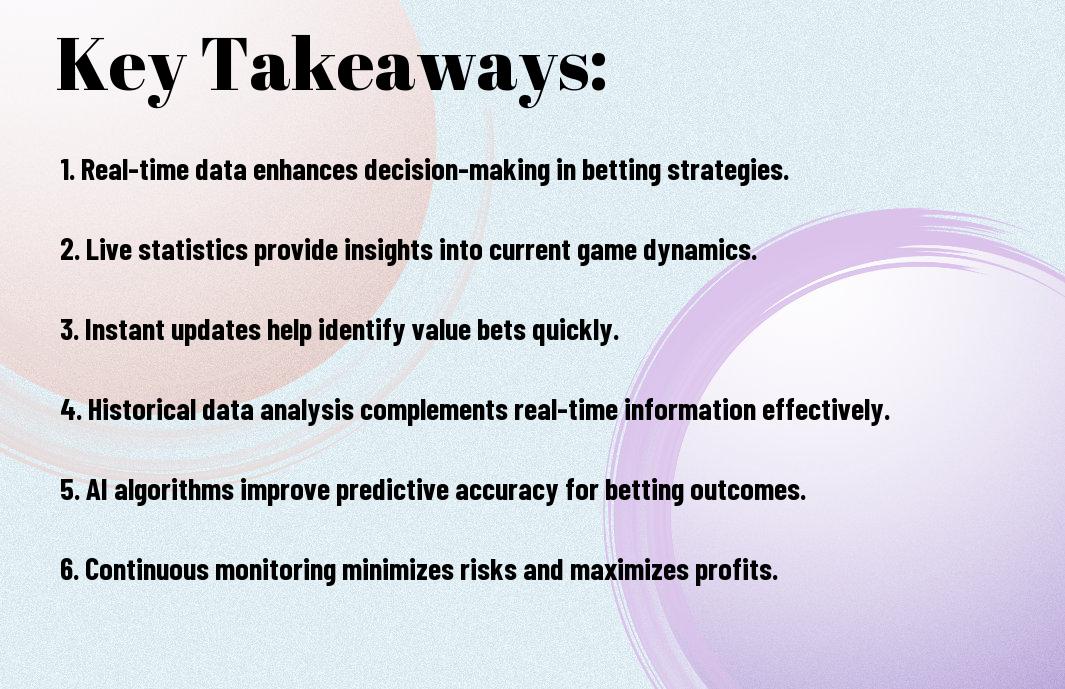
  • Utilizing real-time data can significantly enhance betting strategies by providing up-to-the-minute information on team and player performance, allowing for more informed decision-making.
  • Access to real-time data enables bettors to react quickly to changing circumstances, such as injuries or weather conditions, that can impact the outcome of a game.
  • Real-time data analytics can help identify trends and patterns that may not be immediately apparent, giving bettors a competitive edge in the market.
  • By leveraging real-time data, bettors can optimize their betting timing, placing wagers at the most advantageous moments to maximize potential returns.
  • Effective use of real-time data requires a combination of technical expertise, analytical skills, and a deep understanding of the sports and betting markets to interpret and apply the information effectively.

Real-Time Data Sources

The availability of real-time data is necessary for making informed betting decisions. You can access various data sources, including sports event feeds, market movement indicators, and more, to stay ahead of the game. Your ability to analyze and interpret this data will significantly impact your betting strategy.

Sports Event Feeds

Between the various options available, sports event feeds provide you with up-to-the-minute information on ongoing events, allowing you to make timely decisions. You can access these feeds through various platforms, giving you the edge you need to succeed.

Market Movement Indicators

For your betting strategy to be effective, you need to understand market movement indicators, which signal changes in odds and betting patterns. You can use this information to adjust your bets and maximize your returns.

Also, as you explore deeper into market movement indicators, you will discover that they can be used to identify trends and patterns in the betting market, enabling you to make more accurate predictions and informed decisions, which can significantly improve your chances of winning, and you will be able to refine your strategy to achieve your goals.

Data Analysis Tools

Clearly, having the right data analysis tools is crucial for making informed betting decisions. You can use various software and platforms to collect, analyze, and visualize data, helping you to identify trends and patterns that inform your bets.

Statistical Models

Around this point, you’ll find that statistical models can help you make sense of the data, allowing you to create predictive models that forecast outcomes and guide your betting strategy, enabling you to make more accurate predictions.

Machine Learning Applications

Against the backdrop of traditional analysis methods, machine learning applications offer a more advanced approach, using algorithms to identify complex patterns in large datasets, which can significantly improve your betting outcomes, as you become more adept at using these tools.

But as you explore deeper into machine learning applications, you’ll discover that they can be used to analyze vast amounts of data, including real-time data, to identify trends and patterns that may not be immediately apparent, allowing you to refine your betting strategy and make more informed decisions, ultimately giving you a competitive edge in the betting market, and helping you to achieve your goals, as you continue to use and refine your approach.

Market Efficiency

All markets strive for efficiency, but you can exploit inefficiencies for smarter betting by analyzing real-time data and making informed decisions.

Price Discrepancies

On occasion, price discrepancies arise, allowing you to capitalize on differences between bookmakers and exchanges, giving you an edge in your betting strategy.

Timing Opportunities

Around key events, you can identify timing opportunities to place bets, taking advantage of changing market conditions and increasing your chances of winning.

In fact, as you research deeper into timing opportunities, you’ll discover that being able to react quickly to new information and shifting market dynamics is necessary for maximizing your returns, and with real-time data, you can make more accurate predictions and adjust your bets accordingly, giving you a significant advantage over other bettors.

Risk Management Strategies

Now that you have access to real-time data, you can develop effective risk management strategies to inform your betting decisions, helping you to minimize losses and maximize gains.

Bankroll Distribution

To allocate your funds efficiently, you should consider distributing your bankroll across various bets, ensuring that you don’t over-extend yourself and can withstand potential losses, allowing you to maintain a stable betting portfolio.

Position Sizing

Beside allocating your bankroll, position sizing is also vital, as it determines the amount you should bet on each outcome, enabling you to manage your risk exposure and potential returns, based on your confidence in the bet and the odds provided.

Consequently, as you refine your position sizing strategy, you will be able to adjust your bets according to the strength of your convictions, your risk tolerance, and the specific characteristics of each betting opportunity, ultimately leading to more informed and effective betting decisions that align with your overall goals and risk management approach.

Technical Infrastructure

Despite the complexity of real-time data, you can set up a system to process and analyze it effectively. Your technical infrastructure should be able to handle large amounts of data and provide fast processing speeds. This will enable you to make informed betting decisions quickly.

Data Processing Systems

Beneath the surface of your technical infrastructure, you need reliable data processing systems. You should invest in systems that can handle high volumes of data and provide accurate analysis. This will help you to identify trends and patterns in the data.

Automated Alerts

Among the key features of your technical infrastructure, automated alerts can be highly beneficial. You can set up alerts to notify you of changes in the data, allowing you to react quickly to new information.

But what makes automated alerts truly powerful is their ability to be customized to your specific needs. You can set up alerts based on specific conditions, such as changes in odds or scores, and receive notifications in real-time. This enables you to stay up-to-date with the latest developments and make informed betting decisions.

Psychological Aspects

Your mental state plays a significant role in making informed betting decisions, and understanding these aspects can help you make smarter choices.

Decision Making Under Pressure

Around the time of a big game, you may feel anxious, which can cloud your judgment and lead to impulsive decisions, affecting your betting strategy.

Emotional Control

For instance, managing your emotions is key to avoiding reckless bets, and you should strive to separate emotions from your decision-making process to achieve better outcomes.

Psychological factors such as emotional control can significantly impact your betting performance, and by being aware of your emotional state, you can develop strategies to manage stress and make more rational decisions, ultimately leading to more successful bets.

Conclusion

Presently, you can make more informed betting decisions by leveraging real-time data. You can enhance your betting experience by utilizing the latest insights. For more information on enhancing your NBA betting, visit Leveraging Live Data Feeds for Successful NBA Betting Platforms to improve your strategy and maximize your chances of winning with your bets.

FAQ

Q: What is the importance of leveraging real-time data for smarter betting, and how can it impact my betting decisions?

A: Leveraging real-time data for smarter betting is imperative as it provides punters with the most current and accurate information, enabling them to make informed decisions. With real-time data, bettors can analyze team and player performance, track injuries, and stay updated on weather conditions, all of which can significantly influence the outcome of a game. By utilizing real-time data, bettors can increase their chances of making successful bets and minimize potential losses.

Q: How can I effectively utilize real-time data to gain an edge in sports betting, and what tools or resources should I use to access this information?

A: To effectively utilize real-time data, you can use various tools and resources such as sports analytics platforms, live score trackers, and social media. These tools provide real-time updates on game statistics, player performance, and other relevant information. Additionally, you can follow sports analysts, pundits, and experts on social media to gain insights and stay updated on the latest developments. It’s also imperative to have a reliable and trustworthy source of real-time data to ensure accuracy and make informed betting decisions.

Q: Are there any potential risks or limitations associated with relying on real-time data for betting, and how can I mitigate these risks to ensure successful betting outcomes?

A: While real-time data can be highly beneficial for betting, there are potential risks and limitations to consider. One of the primary risks is the potential for inaccurate or misleading information, which can lead to poor betting decisions. To mitigate this risk, it’s imperative to verify the accuracy of the data and use multiple sources to confirm the information. Another limitation is the potential for over-reliance on data, which can lead to neglect of other imperative factors such as team dynamics and player motivation. To ensure successful betting outcomes, it’s crucial to strike a balance between data analysis and other forms of research, and to continually monitor and adjust your betting strategy as needed.

Data Visualization – A Game-Changer for Betting Analysis

As you examine into the world of betting, you’ll discover that analyzing data is key to making informed decisions. Your ability to interpret complex information will significantly impact your success. By utilizing data visualization, you can transform raw numbers into actionable insights, gaining a competitive edge in the betting landscape. You will be able to identify trends, patterns, and correlations that inform your betting strategy, ultimately enhancing your chances of winning.

Key Takeaways:

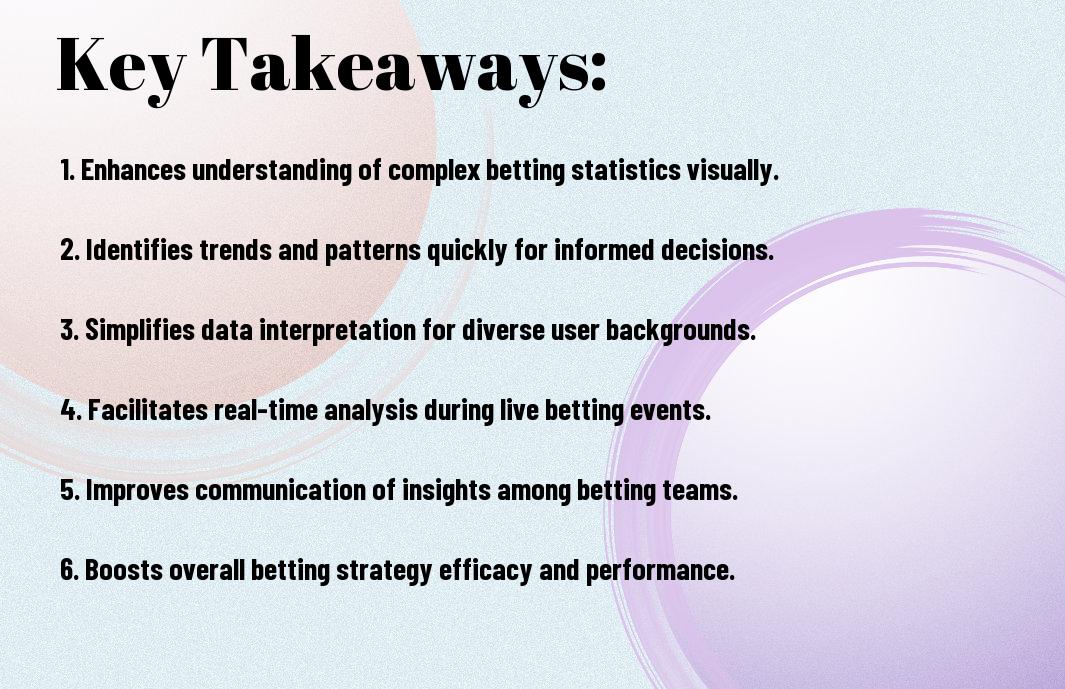
  • Data visualization is a powerful tool for betting analysis, enabling users to quickly and easily identify trends and patterns in complex data sets, leading to more informed decision-making.
  • Effective data visualization can help bettors to spot potential biases and anomalies in the data, allowing them to adjust their strategies and gain a competitive edge.
  • Interactive and dynamic visualizations can facilitate exploratory data analysis, enabling users to drill down into specific aspects of the data and gain a deeper understanding of the underlying factors that drive outcomes.
  • By leveraging data visualization, bettors can develop a more nuanced understanding of team and player performance, as well as other factors that impact the outcome of events, such as weather, injuries, and coaching decisions.
  • Ultimately, data visualization has the potential to revolutionize the field of betting analysis, providing users with a more comprehensive and accurate understanding of the data and enabling them to make more strategic and profitable bets.

Visual Analytics in Sports Betting

A key aspect of sports betting is the ability to analyze large amounts of data, and visual analytics provides you with the tools to do so effectively. You can use visual analytics to gain insights into team performance, player statistics, and other factors that can inform your betting decisions.

Real-time Data Representation

Around the clock, you have access to real-time data that can help you make informed betting decisions. You can use this data to track changes in odds, scores, and other factors that can impact your bets.

Pattern Recognition Tools

About the most effective way to analyze data is by using pattern recognition tools, which allow you to identify trends and correlations that can inform your betting strategy. You can use these tools to analyze large datasets and identify patterns that may not be immediately apparent.

At this point, you can take your analysis to the next level by using advanced pattern recognition tools to identify complex patterns and trends in the data. You can use these insights to refine your betting strategy and make more informed decisions, giving you a competitive edge in the world of sports betting.

Statistical Visualization Methods

Any data visualization method you choose should effectively communicate insights from your data, and statistical visualization methods are no exception, enabling you to extract valuable information from your betting analysis.

Predictive Modeling Graphs

Modeling your data with predictive graphs allows you to forecast outcomes, giving you a competitive edge in betting, and helping you make informed decisions based on your analysis.

Performance Trend Analysis

Behind every successful bet is a thorough analysis of performance trends, and by using data visualization, you can identify patterns and trends that inform your betting strategy.

Methods such as line charts and scatter plots can help you analyze performance trends in your betting data, allowing you to track changes over time and make adjustments to your strategy, giving you a better understanding of your strengths and weaknesses, and enabling you to make more accurate predictions.

Interactive Dashboard Elements

Many betting analysis tools now incorporate interactive dashboard elements, allowing you to explore your data in a more immersive and engaging way, enabling you to make more informed decisions.

Live Odds Movement Charts

Alongside other features, an important component of your analysis will be live odds movement charts, which help you track changes in real-time, giving you an edge in your betting strategy.

Historical Data Mapping

Interactive historical data mapping enables you to visualize your past performance, identifying trends and patterns that can inform your future bets, allowing you to refine your approach based on your own successes and setbacks.

Another aspect of historical data mapping is that it allows you to analyze your betting history in detail, helping you understand what works for you and what doesn’t, so you can adjust your strategy to maximize your returns, making your betting more effective and profitable over time, as you learn from your own experiences and adapt to new information.

Risk Assessment Visualization

To effectively analyze betting data, you need to visualize risk assessment. This helps you make informed decisions and minimize potential losses. By leveraging data visualization tools, you can gain valuable insights into your betting strategy.

Probability Distribution Displays

By utilizing probability distribution displays, you can better understand the likelihood of different outcomes. This enables you to adjust your betting strategy accordingly, allowing you to make more informed decisions.

Variance Indicators

At the heart of risk assessment visualization are variance indicators, which help you identify potential risks and opportunities. You can use these indicators to refine your betting strategy and optimize your results.

This variance indicator feature provides you with a detailed analysis of your betting data, allowing you to identify trends and patterns that may not be immediately apparent. You can use this information to adjust your betting strategy, making more informed decisions and minimizing potential losses. As you explore your data, you will gain a deeper understanding of your betting habits and be able to make adjustments to optimize your results.

Market Movement Graphics

Now, as you research into the world of data visualization for betting analysis, you’ll discover how market movement graphics can enhance your understanding of trends. You can learn more about Game-Changing Trends: Sports Data Visualization’s Evolution and its impact on your betting strategy.

Line Movement Tracking

Among the various tools at your disposal, line movement tracking stands out as a key component of market movement graphics, allowing you to monitor changes in odds over time and make informed decisions.

Money Flow Visualization

By utilizing money flow visualization, you can gain insights into the distribution of bets and identify patterns that may influence your wagering choices, enabling you to adjust your strategy accordingly.

Consequently, as you explore money flow visualization further, you’ll find that it provides a detailed breakdown of the money flowing into each market, helping you to identify where the smart money is going and make more accurate predictions, ultimately giving you an edge in your betting analysis.

Data Integration Systems

Your data integration system is the backbone of your betting analysis, allowing you to combine data from various sources and gain a comprehensive understanding of the market. This enables you to make informed decisions and stay ahead of the competition.

Cross-platform Data Synthesis

Against the backdrop of diverse data sources, you’ll need to synthesize information from multiple platforms to get a unified view of your betting landscape, facilitating more accurate analysis and decision-making.

API Visualization Tools

Similarly, to effectively utilize your data, you’ll need to leverage API visualization tools that can help you present complex data insights in a clear and actionable manner, allowing you to optimize your betting strategy.

Also, as you explore deeper into API visualization tools, you’ll discover that they offer a range of benefits, including real-time data updates, customizable dashboards, and advanced analytics capabilities, all of which can be tailored to your specific needs and preferences, enabling you to refine your betting approach and achieve greater success.

Conclusion

Hence, as you examine into the world of betting analysis, you will find that data visualization is a powerful tool at your disposal. You can leverage it to uncover trends, patterns, and insights that inform your decisions. With data visualization, you can make more accurate predictions and gain a competitive edge, ultimately enhancing your betting experience and potentially increasing your winnings. You will be able to make data-driven decisions, driving your success in betting analysis.

FAQ

Q: What is data visualization and how does it apply to betting analysis?

A: Data visualization is the process of using graphical representations to communicate information and trends within data. In the context of betting analysis, data visualization is a game-changer as it enables bettors to quickly and easily identify patterns, trends, and correlations within large datasets. By visualizing data, bettors can gain a deeper understanding of team and player performance, making it easier to make informed decisions and place more accurate bets.

Q: How can data visualization help me improve my betting strategy?

A: Data visualization can help improve your betting strategy in several ways. For example, visualizations such as line charts and bar graphs can be used to track team performance over time, identifying areas of strength and weakness. Additionally, scatter plots and heat maps can be used to analyze the relationship between different variables, such as possession and shots on goal. By leveraging these visualizations, bettors can identify trends and patterns that may not be immediately apparent from raw data, allowing them to refine their strategy and make more informed decisions.

Q: What tools and techniques are available for creating effective data visualizations for betting analysis?

A: There are a variety of tools and techniques available for creating effective data visualizations for betting analysis. Popular data visualization tools such as Tableau, Power BI, and D3.js can be used to create interactive and dynamic visualizations. Additionally, programming languages such as Python and R can be used to create custom visualizations and automate data analysis tasks. Techniques such as data mining, machine learning, and statistical modeling can also be used to extract insights from data and create predictive models. By leveraging these tools and techniques, bettors can create effective data visualizations that help them gain a competitive edge in their betting analysis.

Skip to content