
As you navigate the world of betting systems, you will inevitably encounter setbacks. Your strategy, no matter how well-researched, can fail. You may fall into common traps, such as chasing losses or overestimating your edge. By examining your mistakes, you can refine your approach and improve your chances of success. You will learn to identify and avoid pitfalls, adapting your strategy to achieve your goals. Your failures can become valuable lessons, helping you develop a more effective betting system.
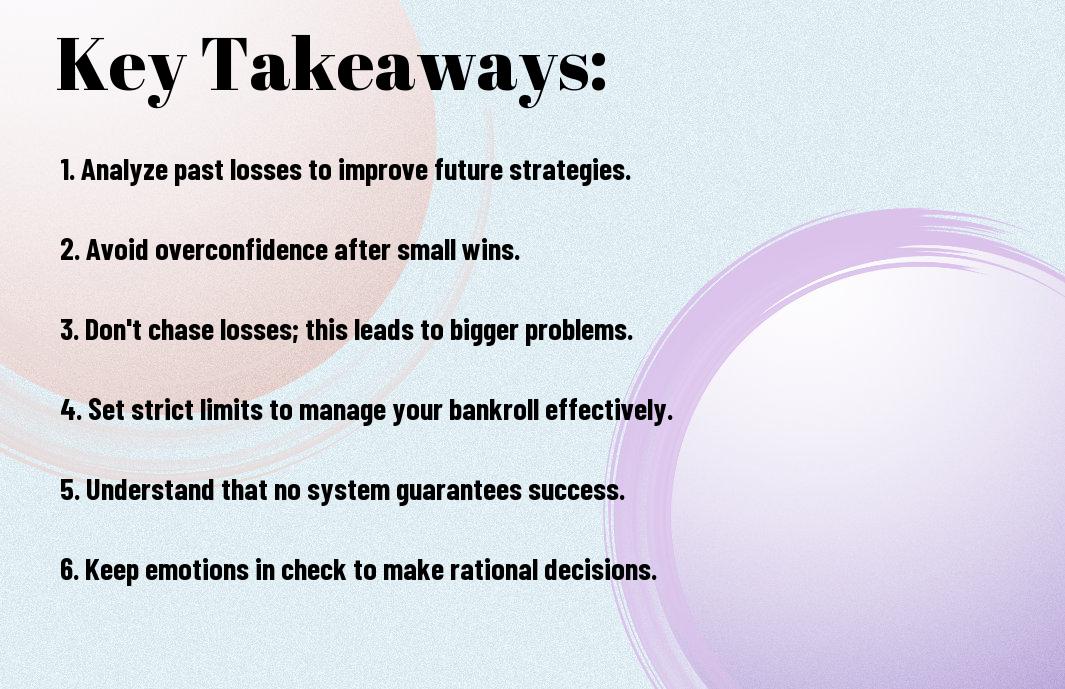
Key Takeaways:
- Many betting systems fail due to unrealistic expectations, such as expecting to win every time or making unrealistic profit projections, which can lead to disappointment and poor decision-making.
- Over-reliance on a single strategy or system can be detrimental, as it may not account for changing circumstances or unexpected events, highlighting the importance of adaptability in betting.
- Failing to manage risk effectively is a common pitfall, as it can lead to significant losses if not properly mitigated, emphasizing the need for a well-thought-out risk management plan.
- Insufficient testing and evaluation of a betting system can lead to poor performance, as it may not be based on reliable data or may not account for various scenarios, making it vital to thoroughly test and evaluate any system before implementation.
- Chasing losses or trying to recoup losses quickly can lead to a cycle of poor decision-making, resulting in further losses, and highlighting the importance of maintaining a level head and sticking to a well-planned betting strategy.

The Psychology of Betting Failures
To understand why betting systems often fail, you need to examine the psychological factors that influence your decisions. Your mindset and emotional state can significantly impact your betting outcomes, leading to a vicious cycle of losses.
Confirmation Bias in Betting
Above all, you should be aware of confirmation bias, which can lead you to misinterpret or ignore data that contradicts your preconceived notions, causing you to make poor betting decisions based on incomplete information.
Emotional Decision Making
Any attempt to make rational betting decisions can be derailed by emotions such as fear, greed, or anxiety, which can cloud your judgment and lead to impulsive choices that undermine your betting strategy.
In addition, when you let emotions dictate your betting decisions, you become more prone to chasing losses or getting carried away with wins, which can quickly deplete your bankroll and undermine your confidence in your betting system, ultimately leading to a downward spiral of poor decision-making and decreased chances of success.
Common System Flaws
Now that you’re aware of the importance of learning from failure, it’s time to investigate into the common pitfalls that can hinder your betting system’s success. You’ll encounter various flaws that can lead to significant losses if not addressed properly.
Martingale Strategy Pitfalls
Among the most notable flaws is the Martingale strategy’s tendency to lead you into a cycle of chasing losses, causing your bets to escalate rapidly. You may find yourself risking more than you can afford, which can be detrimental to your overall betting experience.
Progressive Betting Traps
Beneath the surface of progressive betting systems lie traps that can catch you off guard, such as unrealistic expectations and poor bankroll management. You need to be cautious of these traps to avoid depleting your funds prematurely.
This type of trap can be particularly damaging because it often lures you into a false sense of security, making you believe that your system is working when, in reality, you’re just delaying the inevitable. You should carefully evaluate your progressive betting strategy to ensure it’s based on sound principles and not just a recipe for disaster, as you work to develop a betting system that truly suits your needs and risk tolerance.
Risk Management Mistakes
Once again, you’ll find that poor risk management is a major contributor to the downfall of many betting systems, and it’s an area where you can learn from failure, by identifying and avoiding common pitfalls that can lead to significant losses, and ultimately, to the collapse of your entire betting strategy.
Bankroll Mismanagement
With inadequate bankroll management, you expose your betting system to unnecessary risks, as you may be betting more than you can afford to lose, which can lead to a rapid depletion of your funds, and put your entire betting strategy in jeopardy, forcing you to make desperate bets in an attempt to recoup your losses.
Stake Sizing Errors
For instance, failing to properly size your stakes can have a significant impact on your betting system’s performance, as betting too much on a single outcome can lead to significant losses, while betting too little may not generate enough returns to be sustainable, and it’s up to you to find the right balance.
Plus, when you make stake sizing errors, you not only risk losing money, but you also compromise your ability to withstand a series of losses, which can happen even with a good betting system, and you need to be prepared to absorb these losses, and adjust your stake sizes accordingly, to ensure the long-term viability of your betting strategy.
Data Interpretation Issues
Despite the importance of data analysis in betting systems, you can still fall prey to common pitfalls. Your ability to interpret data correctly is vital to making informed decisions, and errors can lead to significant losses.
Sample Size Fallacies
Against the backdrop of limited data, you may draw conclusions that are not representative of the larger picture, leading to flawed decision-making. Your sample size may be too small, causing you to overlook significant trends or patterns.
Correlation vs. Causation
Beside the complexity of data analysis, you must distinguish between correlation and causation to avoid misinterpreting relationships between variables. Your understanding of this distinction is imperative to developing effective betting strategies.
Due to the complexity of correlation vs. causation, you should carefully examine the relationships between variables to determine whether they are causal or merely coincidental. You must consider multiple factors and test your hypotheses to ensure that your conclusions are valid, allowing you to make more accurate predictions and informed betting decisions.
Technical System Failures
All betting systems are prone to technical failures, which can significantly impact your overall performance. You need to be aware of these potential pitfalls to avoid costly mistakes and optimize your strategy.
Over-optimization
Betwixt the lines of code and complex algorithms, you may find that your system is over-optimized, leading to poor performance in live markets. You should be cautious not to overfit your model to historical data, as this can lead to disappointing results.
Backtesting Errors
With the rise of automated betting systems, backtesting has become a standard practice. You should ensure that your backtesting methodology is sound, as errors can lead to inaccurate results and poor decision-making.
Technical issues with backtesting can be devastating to your betting system, as you may be relying on false positives or inaccurate data. You will need to carefully evaluate your backtesting approach to identify any potential flaws and make necessary adjustments to ensure that your system is robust and reliable, allowing you to make informed decisions and maximize your returns.
Recovery Mistakes
Many betting systems fail due to poor recovery strategies, leading to significant financial losses. You must be aware of common pitfalls to avoid them and develop a successful approach.
Chasing Losses
Losses often trigger impulsive decisions, causing you to chase your losses, which can lead to further financial damage. You need to stay calm and stick to your strategy to avoid this mistake.
System Hopping
About the time you think you’ve found the perfect system, you may start to doubt it and look for another. You should be cautious of constantly switching systems, as this can lead to confusion and poor decision-making.
In fact, system hopping can be a major obstacle to your success, as you’ll never give a system enough time to prove itself, and you’ll end up losing money in the process. You should choose a system and stick to it, making adjustments as needed, to increase your chances of long-term success.
Conclusion
As a reminder, you will inevitably encounter setbacks when developing your betting systems. You must analyze your failures to identify common pitfalls, such as overreliance on a single strategy or neglecting to adapt to changing circumstances. By acknowledging and learning from your mistakes, you can refine your approach and improve your chances of success, ultimately making your betting systems more effective and increasing your overall returns. Your ability to learn from failure is key to achieving long-term success in betting.
FAQ
Q: What are the most common pitfalls to avoid when developing a betting system to learn from failure?
A: When creating a betting system, it’s necessary to avoid common pitfalls that can lead to failure. One of the most significant mistakes is not testing the system thoroughly before implementing it. This can be done by backtesting the system using historical data to identify potential flaws and areas for improvement. Another common pitfall is not accounting for variables such as odds movements, injuries, and weather conditions, which can significantly impact the outcome of events. Additionally, failing to manage bankroll effectively and not setting realistic expectations can also lead to failure. By being aware of these potential pitfalls, you can develop a more robust betting system that can help you learn from your mistakes and improve your chances of success.
Q: How can I effectively analyze and learn from my betting failures to improve my betting system?
A: Analyzing and learning from betting failures is a key component of developing a successful betting system. To do this effectively, it’s necessary to keep a detailed record of all your bets, including the stake, odds, and outcome. This will help you identify patterns and trends in your betting, such as which types of bets you are most successful with and which areas you need to improve on. It’s also important to analyze your decision-making process and identify any biases or emotional influences that may be impacting your betting decisions. By regularly reviewing and analyzing your betting performance, you can identify areas for improvement and make adjustments to your system to increase your chances of success.
Q: What strategies can I use to minimize losses and maximize gains when learning from failure in betting systems?
A: To minimize losses and maximize gains when learning from failure in betting systems, it’s necessary to have a solid risk management strategy in place. This can include setting a budget and sticking to it, as well as using techniques such as hedging and stop-losses to limit potential losses. It’s also important to diversify your bets and not put too much stake on a single event. Another effective strategy is to use a flat betting approach, where you bet the same amount on each event, rather than increasing your stake after a win or decreasing it after a loss. By using these strategies, you can minimize your losses and maximize your gains, even when learning from failure, and develop a more robust and resilient betting system over time.